
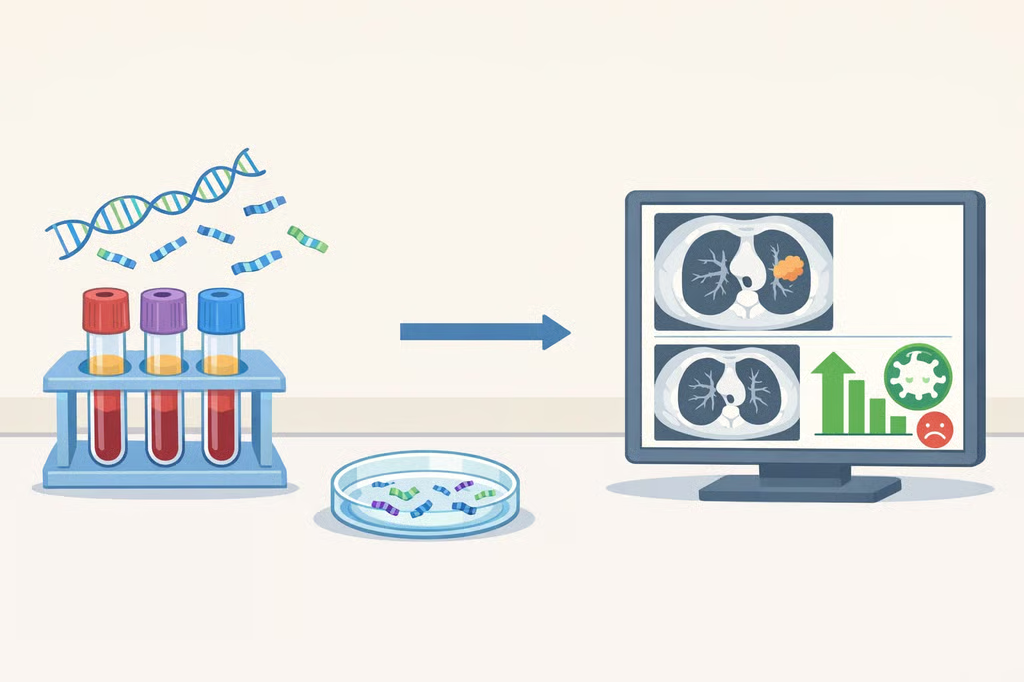
- ctDNA Blood Test Predicts Immunotherapy Response in Advanced Lung Cancer
- Inside the retrospective study behind the ctDNA blood test claim
- How ctDNA compares with other biomarkers
- The trial testing whether ctDNA monitoring during pembrolizumab treatment changes outcomes
- What to check before acting on a ctDNA result
ctDNA Blood Test Predicts Immunotherapy Response in Advanced Lung Cancer
A retrospective study of 118 patients with advanced non-small cell lung cancer (NSCLC) found that post-treatment blood levels of circulating tumor DNA (ctDNA) could sort responders from nonresponders with 80.9% sensitivity and 79.8% specificity, using a cutoff of 3.59 ng/µL, according to the study. That is the kind of finding that gets flattened into a headline claiming a ctDNA blood test predicts immunotherapy response in advanced lung cancer. The real evidence is narrower than that, and understanding why matters for anyone reading biomarker research, not only patients facing a treatment decision.
A separate, actively recruiting trial is now testing the question this single study cannot answer: whether patients whose ctDNA stays detectable six weeks into pembrolizumab treatment do better if chemotherapy is added early, before a scan shows the cancer has grown (ClinicalTrials.gov, updated about two months ago). The distinction between a biomarker that tracks with outcome and one that tells doctors which treatment to choose runs through everything below.
Inside the retrospective study behind the ctDNA blood test claim
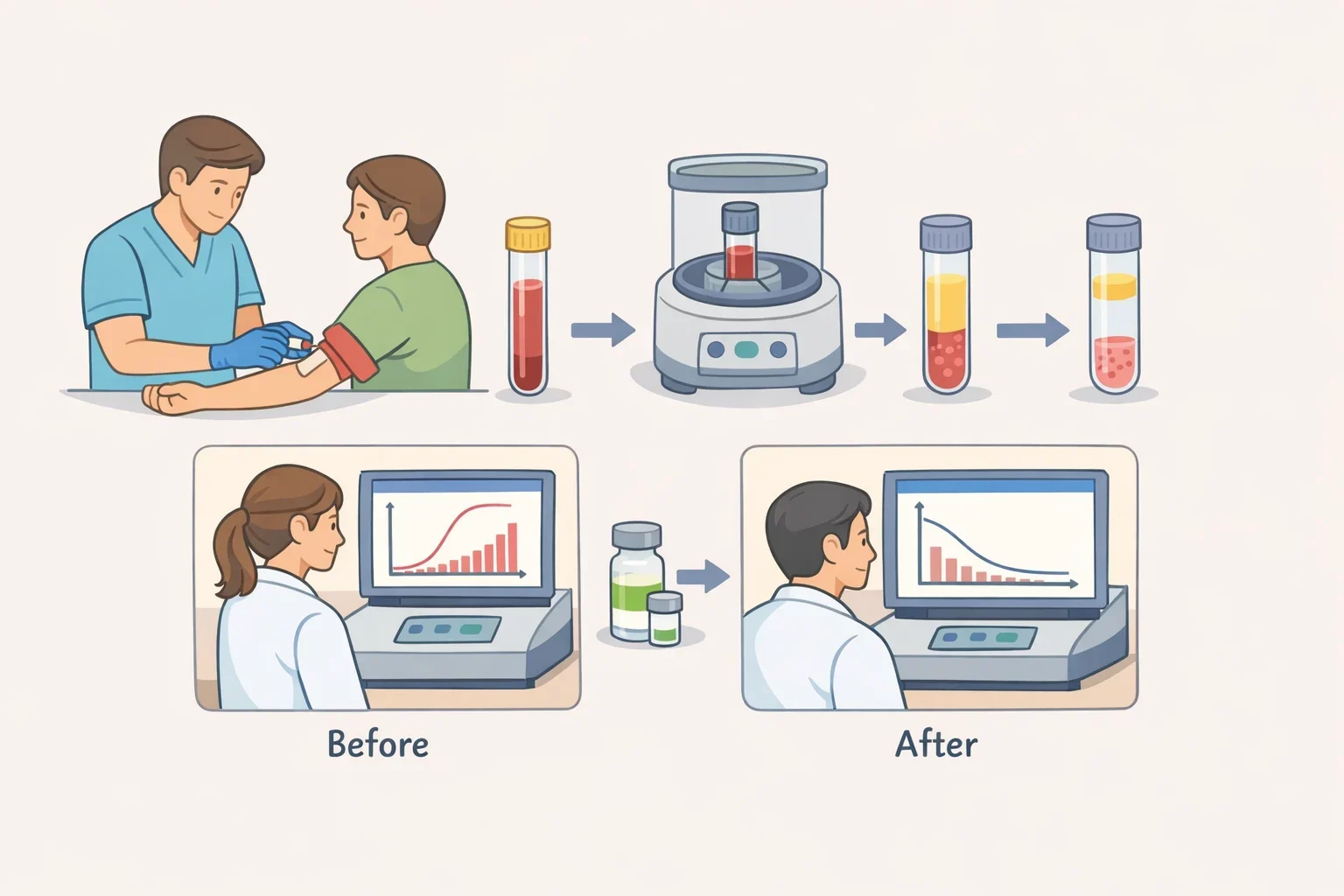
The published abstract describes a retrospective cohort of 118 patients with stage IIIB/IV NSCLC who received tislelizumab at Quanzhou First Hospital between January 2021 and December 2023 (PubMed, about 8 months ago). Researchers used a circulating tumor DNA test for lung cancer immunotherapy to measure ctDNA before and after treatment through quantitative PCR, then sorted patients into responders and nonresponders based on imaging under RECIST 1.1 criteria, the study reports.
Post-treatment ctDNA was significantly lower in responders than nonresponders, 2.72 ng/µL versus 4.18 ng/µL, and that gap held up statistically (P < .001), according to the findings. Patients with lower ctDNA also lived longer without progression, a median of 8.6 months compared with 5.5 months for patients with higher levels, the same study found. A multivariate model flagged ctDNA level and treatment modality as independent predictors of progression-free survival (PubMed).
The study analyzed patients who received tislelizumab, and the supplied abstract does not describe a randomized comparison against a different treatment. That design can show ctDNA correlates with how patients did on this drug. It cannot show that ctDNA specifically identifies who benefits from immunotherapy versus some other treatment, because no other treatment arm appears in the reported design.
That gap has names: prognostic versus predictive evidence. A prognostic biomarker is associated with outcomes, but that association does not show which treatment works best. A predictive biomarker identifies which of two treatments a specific patient is more likely to benefit from, and confirming that requires comparing outcomes across treatment arms. Because this cohort was not a randomized comparison of treatments, its findings support an association between ctDNA and outcome rather than a treatment-specific predictive claim.
How ctDNA compares with other biomarkers
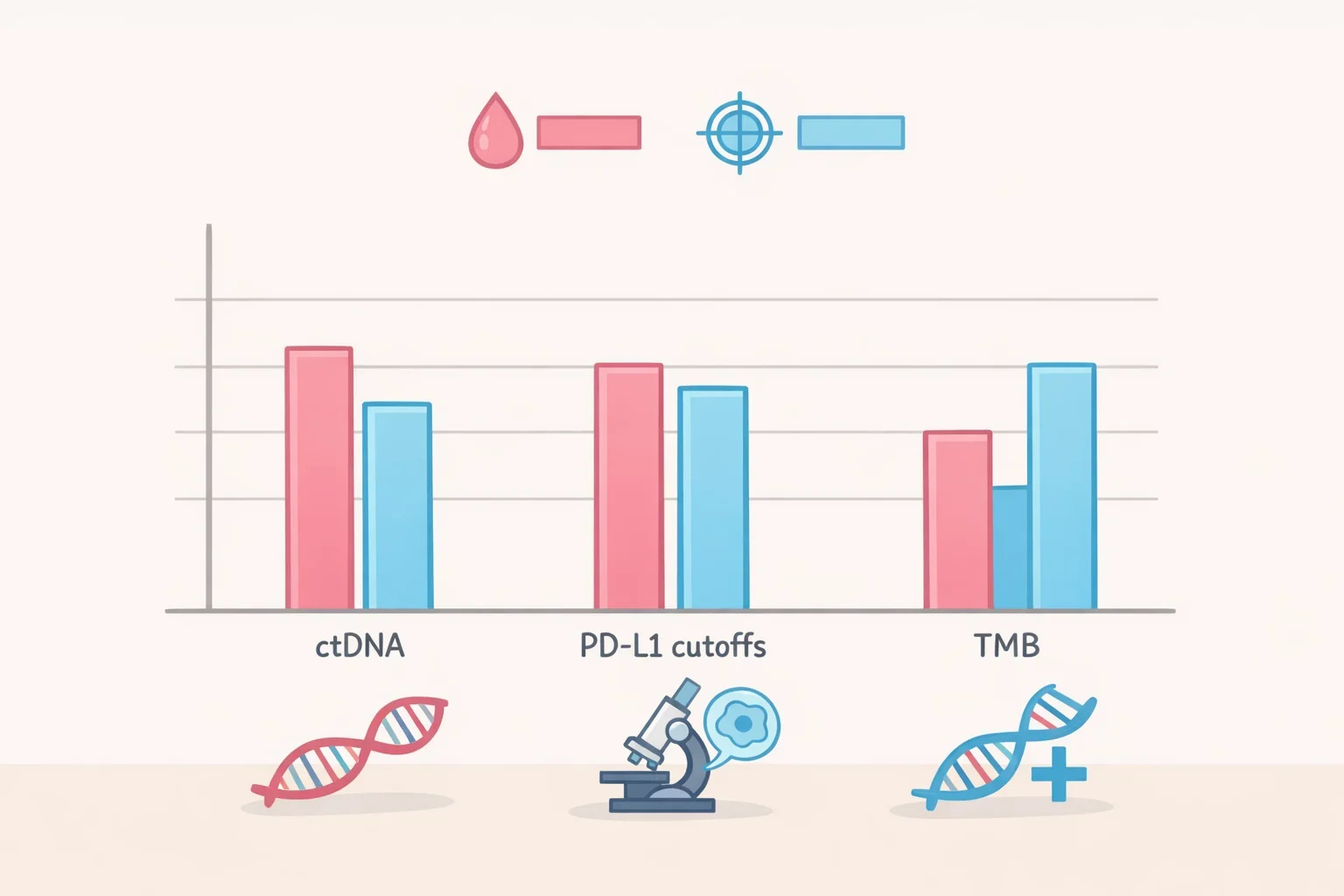
A systematic review and network meta-analysis published earlier this year pooled 54,634 patients across 194 studies worldwide, comparing 13 immunotherapy biomarkers, including ctDNA, PD-L1 at several thresholds, and tumor mutational burden (TMB), according to the analysis. Among those 13, ctDNA had the highest sensitivity, 0.82, and the strongest overall discriminative performance, with an area under the curve of 0.769, the researchers reported.
PD-L1 performance depended heavily on which cutoff was used. A 50% or higher threshold caught fewer responders (sensitivity of 0.42) but was more specific (0.78), while a 1% threshold flipped that tradeoff, catching more responders (sensitivity of 0.68) at the cost of specificity (0.48), per the same meta-analysis. TMB scored in between, with sensitivity of 0.56 and specificity of 0.69 (PubMed).
The pooled analysis provides a broad comparison across immunotherapy studies; the supplied abstract does not show that its headline ctDNA estimates apply specifically to every patient with advanced NSCLC. It is a network meta-analysis spanning multiple cancer types and assays, not a head-to-head trial that tested ctDNA against PD-L1 in the same NSCLC patients and tracked outcomes. Its scale reflects how much biomarker research already exists, not proof that ctDNA outperforms other tests for any individual patient. The analysis's stated conclusion leans toward combination testing, pairing biomarkers rather than relying on one, and calls for more consistency and standardization across studies before that approach can be refined, the analysis notes.
Neither the single-center cohort nor the meta-analysis tests what happens when a doctor changes a patient's treatment because of a ctDNA reading. That is a different kind of study.
The trial testing whether ctDNA monitoring during pembrolizumab treatment changes outcomes
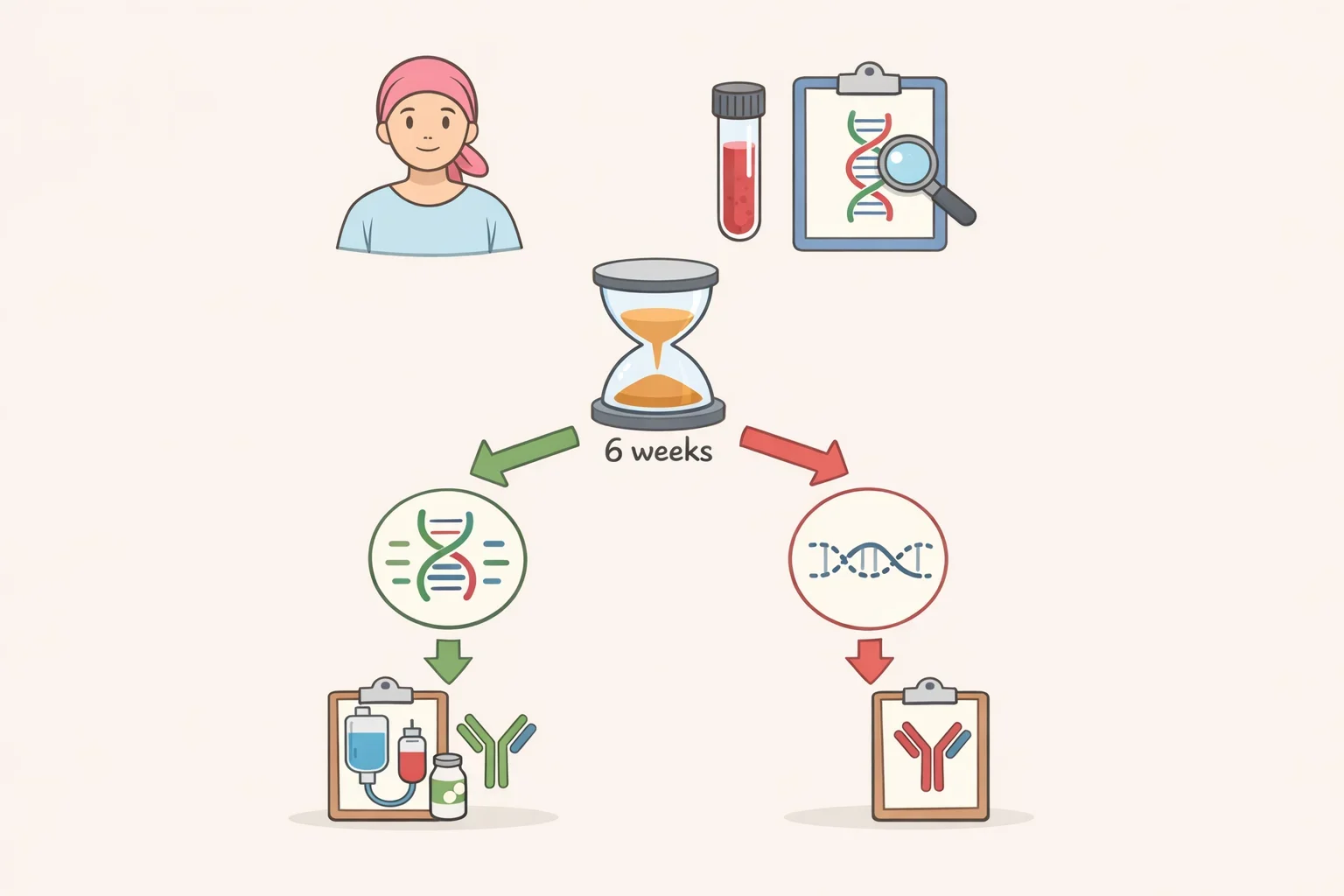
One recruiting trial identified in the registry, NCT04093167, uses ctDNA as a blood test for early immunotherapy response: the multicenter phase II/III study asks whether patients with detectable ctDNA six weeks into pembrolizumab treatment do better if chemotherapy is added early, before imaging shows progression, compared with staying on pembrolizumab alone (ClinicalTrials.gov, updated about two months ago).
Stage 1 measures how closely a ctDNA-based molecular response lines up with imaging results (ClinicalTrials.gov). The registry defines Stage 2 feasibility using a separate threshold: more than 30% of screened patients must still have persistent ctDNA at six weeks before randomization can proceed, according to the trial record.
Detectable ctDNA on screening at six weeks is required for subsequent enrollment and randomization, the registry states. Patients without detectable ctDNA at that point would not meet the stated criterion for subsequent enrollment.
Estimated enrollment is 230 adults age 18 and older. The Stage 2 primary endpoint is progression-free survival, with primary completion targeted for Dec. 31, 2026, and full completion by mid-2027 (ClinicalTrials.gov). Until those results are in, whether adding chemotherapy early improves progression-free survival, the trial's stated endpoint, remains an open question, not a settled one.
A separate trial, NCT05198154, is worth knowing about mainly to avoid confusing it with the first. It monitors ctDNA every three months in NSCLC patients who have already reached a benefit threshold of 12 months of progression-free survival on first-line immunotherapy, measuring the lead time between a detectable ctDNA signal and imaging-confirmed progression (ClinicalTrials.gov, over a year ago). That trial uses either tumor-informed or tumor-agnostic sequencing, depending on whether archived tumor tissue is available, per the study description. It addresses a surveillance question for patients already doing well, not the early treatment-switch question NCT04093167 is testing.
What to check before acting on a ctDNA result

These studies do not establish that a ctDNA result should be used to change a lung cancer treatment plan outside a clinical trial. The retrospective study did not test a treatment change, the meta-analysis compared biomarker accuracy rather than treatment strategies, and the one trial designed to test a ctDNA-guided treatment change has not yet reported results.
Anyone considering ctDNA testing as part of lung cancer care can ask an oncology team directly whether a result would change the care plan outside a trial, since interpretation depends on which assay was used and when the blood was drawn. A detectable, rising, or falling result does not mean the same thing across different studies or labs. If a trial such as NCT04093167 comes up as an option, eligibility is something the study team confirms, not something to determine from the public registry listing alone.
Students and educators evaluating the next ctDNA or biomarker headline can check the same five details:
- Was the study retrospective or randomized, and did it include a comparator treatment arm?
- What population and treatment did participants actually receive?
- When was the biomarker measured relative to treatment?
- What reference standard defined "response"?
- Is the result prognostic (associated with outcome) or predictive (shown to identify who benefits from a specific treatment)?
Patients or caregivers facing an actual decision should bring one direct question to the next oncology appointment: would this specific biomarker test change the treatment plan right now, outside of a clinical trial?