


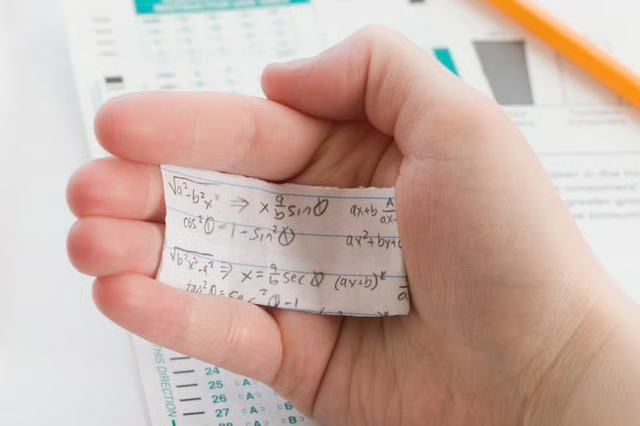
Cheating in college is a serious offense, and it's one a student will most certainly regret. While cheating in high school may only earn you a failing grade or after school study hall, cheating in college may stay on your academic record, even if you transfer schools. Each school has its own policy about academic dishonesty, and you should familiarize yourself with the policy as soon as you start college.
Failing a Course
Most colleges and universities have policies stating that a student who cheats in a class will fail the course, not just the assignment on which they cheated. At some schools, the assignment must be worth a minimum percentage of the final grade for the cheating to merit failing the class, while other colleges hold no such minimum. Failing a class pulls your GPA down drastically, and it's hard to raise that number the further along you advance in your credits.
Suspension
Suspension is a common ramification for cheating in college, and some schools suspend a student for the academic semester or even for the year after a cheating incident. Suspension causes you to fall behind on credits and, in some cases, lose your financial aid. Also, some schools have an honor code that requires you to report cheating when you see it happening; if you turn a blind eye or facilitate cheating, you may receive the same punishment as the student who cheated.
Expulsion
Some schools will expel you on the first offense, while others save expulsion as a final punishment for second-time offenders. Expulsion means that you are dismissed from the college or university for good and have a permanent offense on your academic record. If you ever try to apply to college again, you'll have to report the expulsion and likely explain it. Expulsion can prevent you from finishing your degree and reaching your career goals. It also may be reported if you ever apply for a federal job that requires a background check or security clearance process.
Types of Cheating
Most students know that stealing a test answer key, looking on their neighbor's exam or using private notes on a closed book test are all common forms of cheating. However, plagiarism or using someone else's words as your own is another form of cheating taken seriously by all colleges. When you enter freshman writing classes, you will likely be briefed about the proper way to cite information in your papers; follow these guidelines carefully to avoid a plagiarism charge. Buying a paper online from a website or using a friend's old paper also counts as plagiarism.