
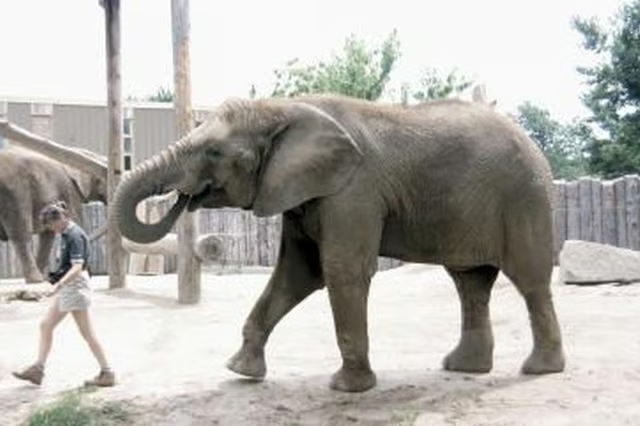
A wildlife biologist studies the characteristics of wild animals in their natural habitats. For an entry-level wildlife biologist job, you need a minimum of a bachelor's degree, and at many colleges, you can major in wildlife biology or a similar field. For more advanced jobs, such as research positions, you would likely need to obtain a master's degree. You'll take a variety of courses during your schooling to prepare you to care for wild animals.
Wildlife Classes
The focus of your bachelor's degree in wildlife biology will be on courses that concentrate on animals. You'll take classes that cover topics such as wildlife management, wildlife biology and animal ecology, according to the USDA Forest Service. More specialized courses are also required, so you'll take classes that focus on subjects such as mammalogy, or the study of mammals; ornithology, or the study of birds; and parasitology, which is the study of parasites. Invertebrate zoology and vertebrate zoology are usually required as part of your major as well.
Additional Science Classes
Because wildlife biology is science-focused, you'll take several other courses that focus specifically on animals, as well as more general courses such as introduction to biology and basic chemistry concepts. The more focused classes will cover cellular biology, genetics and anatomy. Botany and physics classes are usually required as well, according to the U.S. Department of Labor Bureau of Labor Statistics. Classes in environmental conservation, species preservation and forestry are often part of your bachelor's degree, too.
Core Subjects
While the bulk of your coursework will cover wildlife and related issues, you'll likely be required to take basic core classes, such as English, geography and communications. It's almost certain you'll need to meet certain mathematics requirements, including statistics, data analysis and research concepts, since much of a wildlife biologist's job involves analyzing past research and conducting new research. The U.S. Department of Labor Bureau of Labor Statistics notes that you'll need a computer science class because much of your data collection and analysis will rely on computer software.
Graduate School Courses
If you decide to pursue a more advanced job within the wildlife biology field, you'll need to go back to school to get a master's degree. Some wildlife biologists study even longer and receive a doctorate. For example, if you wish to become an independent researcher or a college professor, you'll need a Ph.D., which will require courses in teaching and research, including statistics and methodology. During a master's course of study, you'll take more advanced courses in biology, ecology, genetics, zoology and data analysis.