
Benefits of student newspapers explained for high schools
Nearly 73% of New York City public high schools had no student newspaper, website, or access to a journalism program in a study of 439 schools conducted during 2021–22, according to Baruch College. Three months ago, the American Press Institute reported that only about 1% of New York City public high school students took a journalism class during the 2025–26 school year.
Those numbers point to more than a missing extracurricular activity. A school without a newspaper removes one setting where students can practice reporting, interviewing, verification, editing, collaboration, and deadline work. The available New York City data also shows unequal access by borough, socioeconomic status, and race, while the American Press Institute reports that journalism programs have disappeared particularly in low-income communities.
High school journalism programs deserve broader support. But expansion should include teacher training, equipment, regular publishing opportunities, and clear protections for student editorial independence. A newspaper is useful not because every student will become a journalist, but because it gives students repeated practice handling information responsibly.
The benefits of student newspapers go beyond writing

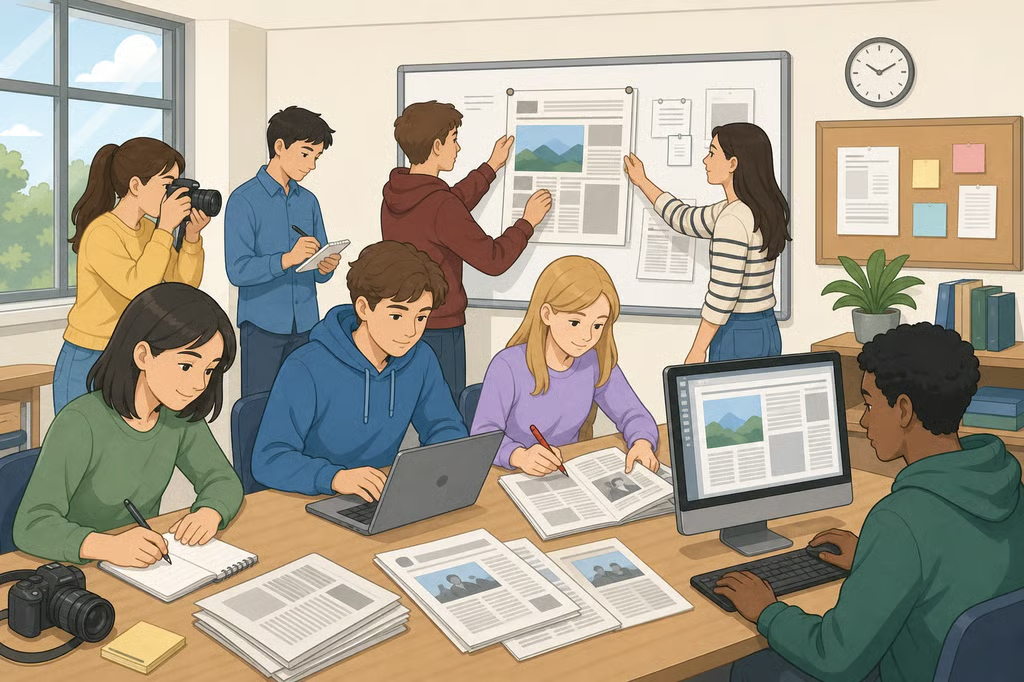
A student newspaper gives academic skills a real audience. Instead of writing only for a teacher, a student might report on a school-board meeting, interview a principal about a schedule change, compare public statements with meeting records, or explain a new policy to classmates. Each assignment requires decisions about evidence, clarity, fairness, and relevance.
The work also has a natural editing cycle. A student reporter drafts a story, checks names and figures, asks a source to clarify a statement, and revises after a peer editor raises a question. Another student may write a headline, select a photograph, or prepare the story for a website. When the deadline arrives, the staff must decide what is ready, what needs more reporting, and what should wait.
Those are the student newspaper skills Geanne Belton, a Baruch journalism professor, identifies when describing leadership, writing, editing, and fact-checking. She also describes journalism as a preview of several career paths, not only work in newsrooms, in Baruch College.
The value is not that every student will become a journalist. Students instead practice communicating information responsibly. They learn that a confident-sounding claim still needs verification, that an interview is not the same as a casual conversation, and that correcting an error is part of publishing rather than a personal failure.
Programs do not need a large newsroom to begin. Journalism for All combines an open-source curriculum with specialized teacher training, startup equipment, technical coaching, and paid internships, according to the American Press Institute. That combination matters because a teacher may be willing to advise a publication but still need help with reporting ethics, digital production, or newsroom workflow.
The model has already created concrete opportunities. When new courses launched at 30 Journalism for All pilot schools, they reached more than 800 students and introduced reporting basics, journalistic ethics, and multimedia production, according to the American Press Institute. Since 2018, The Bell has trained more than 150 New York City students through paid audio-reporting internships, the same source reported.
In June, the American Press Institute reported that 40 Journalism for All students were connected to paid summer 2026 internships at 11 newsrooms. At that point, the internships were planned opportunities, not completed outcomes. That distinction matters. Journalism education should be judged by what students actually get to practice, not only by the promise of future access.
Who has access to high school journalism programs?
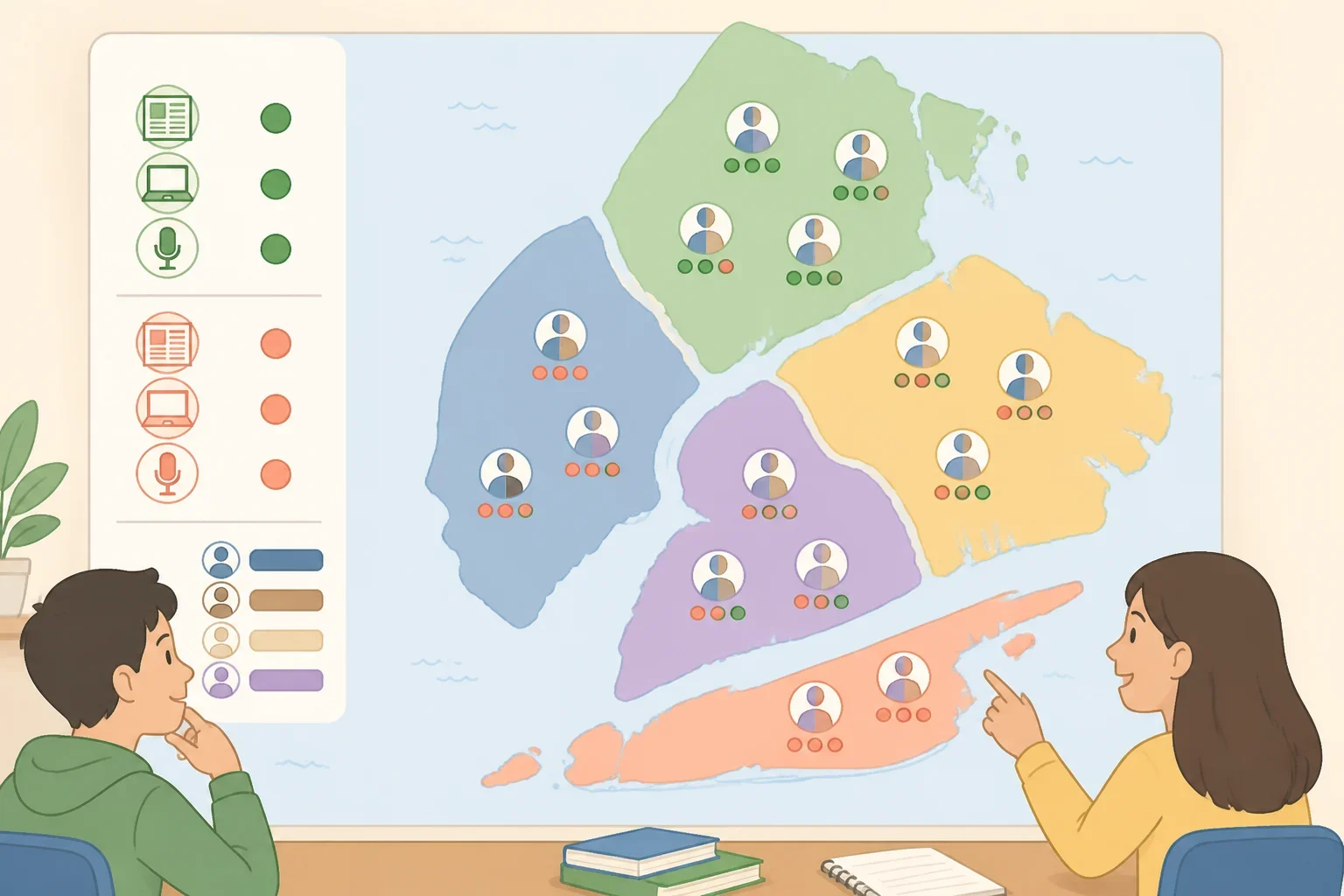
The New York City study offers a useful warning about availability, though it does not explain every reason a program exists or disappears. Nearly 73% of the 439 public high schools surveyed had no student newspaper, website, or journalism-program access, and the study found significant differences by borough, socioeconomic status, and race, according to Baruch College.
The study also found evidence of a decline over time. A 2007–09 survey found newspapers at about half of New York City high schools, while the later study found much less access to newspapers, websites, or journalism programs, according to Baruch College. Because the earlier survey covered fewer schools and the measures were not identical, the comparison should not be treated as a precise trend line. It does support concern about shrinking opportunities in the city.
One correlation deserves careful handling. Among schools with poverty rates of 78% or higher, schools with a student newspaper had higher four-year graduation rates, the Baruch study found (Baruch College). That does not show that a newspaper caused higher graduation rates. Schools with newspapers may differ from schools without them in staffing, leadership, scheduling, or access to outside support.
The finding still matters for equity. If journalism opportunities are more available in schools that already have stronger resources, students in under-resourced schools lose one practical route to build writing, research, public communication, and leadership experience. Nationally, journalism programs have disappeared particularly in low-income communities, according to the American Press Institute. Expanding access should mean reaching schools with limited resources, not simply adding another option where programs are already established.
Producing news can strengthen media literacy
Media literacy begins with questions: Who created this message? Who is the intended audience? Is the claim fact or opinion? What evidence supports it? The National Association for Media Literacy Education identifies those questions as core analytical skills, as summarized in the MSU thesis.
A newsroom makes those questions concrete. A student investigating a claim about school funding has to identify the original source, locate relevant records, ask an informed person for context, and distinguish confirmed information from speculation. A student editing a peer’s article has to explain why a source is insufficient or why a sentence presents an opinion as fact. That is a more active lesson than simply being told to “check your sources.”
The evidence for civic effects should still be described modestly. A classroom action-research study examined 30 ninth-grade students in one rural northeastern Minnesota district. After five news-media-literacy lessons, the study found the greatest change in political trust, slight increases in political knowledge and activity, and a minor effect on political efficacy, according to the MSU thesis. The sample was small, limited to one district, and did not establish that the results would apply nationally.
That limitation does not make the exercise pointless. It shows why journalism education in schools should connect to civics without promising that a newspaper will automatically create informed or active citizens. The goal is more practical: give students repeated chances to examine evidence, recognize uncertainty, listen to people affected by an issue, and explain what they know.
What a sustainable program requires
Funding is a starting point, not a complete plan. The free Journalism for All curriculum had been accessed by more than 500 educators in 45 states by June, and 18 high schools, including all six public high schools in Jackson, Mississippi, were scheduled to launch courses in fall 2026, according to the American Press Institute. Foundations had contributed more than $1 million to support the initiative, the same source reported.
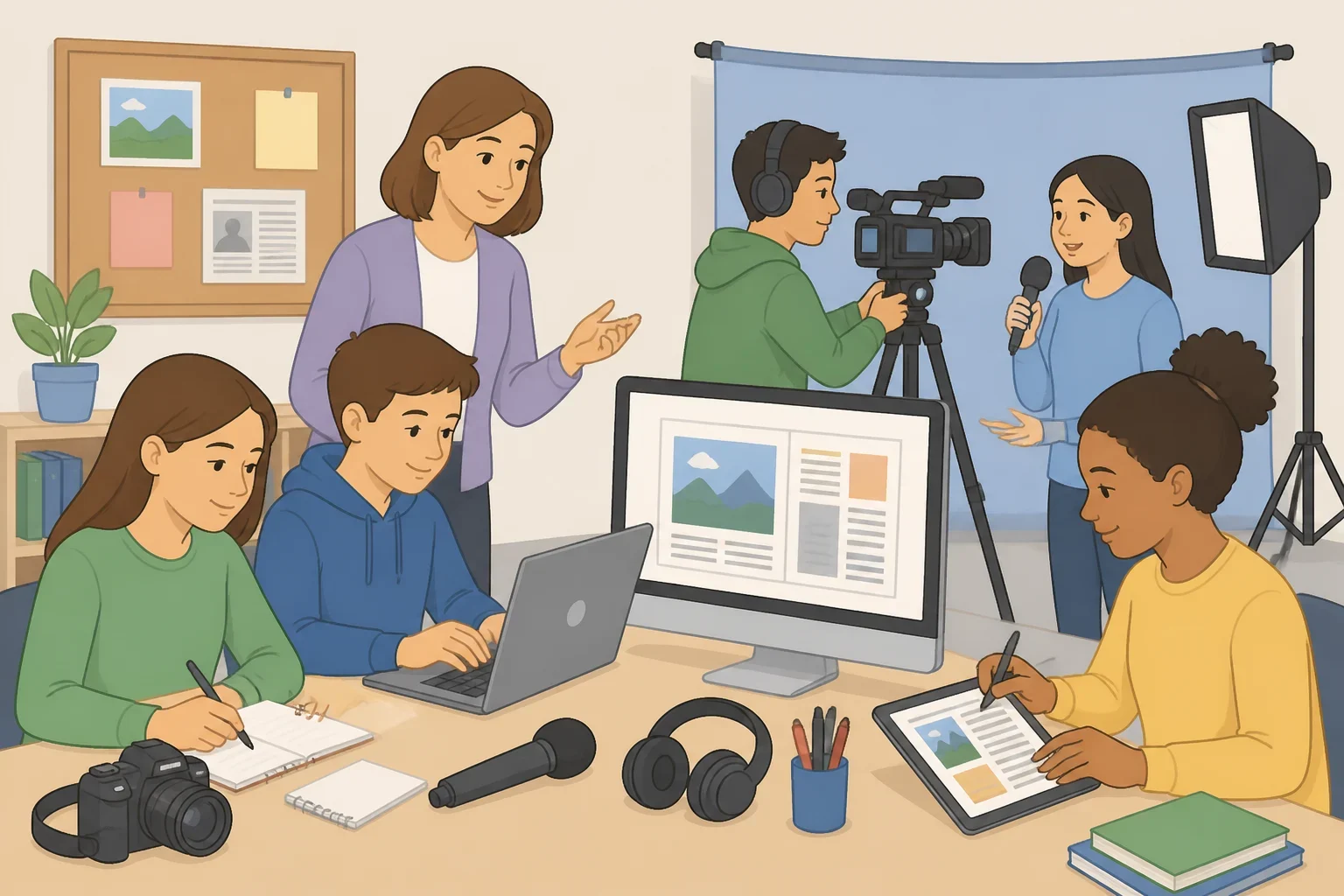
Those investments can help schools acquire recording devices, publishing tools, and training. They cannot by themselves guarantee a stable class schedule, an adviser with time to work with students, or a clear editorial policy. A school board considering a new program should ask what happens after the initial grant ends and whether students will have a regular way to publish their work.
The college experience offers a useful warning. A University of Florida study found that 56.1% of college student news outlets received university funding, while only 52 of 512 surveyed outlets were independent 501(c)(3) nonprofits (University of Florida Brechner FOI Project). Those figures describe college organizations, not high school newspapers. They do illustrate the broader problem of institutional dependence.
David Cuillier, director of the Brechner Freedom of Information Project, has argued that student journalists cannot easily hold an institution accountable if administrators or student government control the budget (University of Florida Brechner FOI Project). High schools need structures suited to their own rules and communities, but the principle is worth carrying forward. Before a difficult story appears, a program should define who makes editorial decisions, how disagreements are handled, and what role an adviser plays.
New York City’s local law requiring annual data collection on student journalism availability offers another practical idea, according to the American Press Institute. Districts cannot address an access problem they do not measure.
What readers can do next
- Teachers: Review a free journalism curriculum, identify a manageable first publication, and ask what training or equipment the school can provide.
- Students: Ask whether the school offers a newspaper, website, broadcast, or journalism class. If it does not, ask an adviser or principal what would be required to start one.
- Parents and guardians: Ask how students learn reporting, source evaluation, editing, and media literacy.
- School leaders: Check which schools have access, who is missing out, and what editorial protections will be in place before approving a new program.
A student newspaper cannot solve every problem in a school. It can give students a consistent place to investigate, write, revise, verify, publish, and take responsibility for what they put into the world. That opportunity should not depend on a student happening to attend one of the schools that still has a newsroom.