
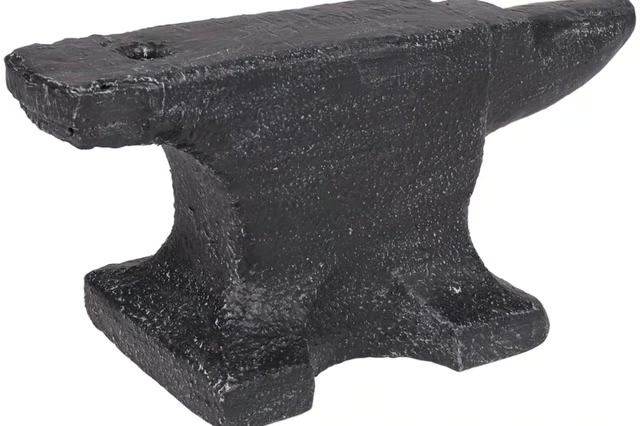
Medieval blacksmiths were important in the community because they provided people with a variety of metal tools. They fabricated weapons for war and constructed household items. Blacksmiths not only created these tools by molding raw metals, but they also repaired and maintained them. Although they were laborers who worked with their hands, blacksmiths held a high social position in medieval and early modern societies.
Household Products
Some of the most important tools a blacksmith made were household items. They handcrafted objects including knives, nails, ornaments and jewelry. They worked on hinges, locks and keys for houses, churches and castles. Blacksmiths of early Lancaster County provided local residents with household utensils, agricultural implements and hardware.
Horse Dealer
Blacksmiths were extremely important to their local communities because of the tools they constructed and the services they provided. The town blacksmith often served as the local horse dealer. He was considered trustworthy and usually had a strong business sense. The horse once served as a fruitful source of employment for blacksmiths. The decline in horse transport -- and the need for horseshoes -- contributed greatly to the traditional town blacksmith's diminished role in society.
Weapons
Blacksmiths played a vital role in many wars, including the American Revolutionary War, by providing weapons and armor. In medieval times, they produced daggers, swords, lances and arrowheads, as well as armor and shields. The blacksmith's duties to support the war effort included sharpening swords and repairing damaged weapons and armor. Blacksmiths were responsible for designing some of the instruments of torture used against prisoners.
Medicine
Blacksmiths sometimes performed medical tasks on humans including general medical procedures and dentistry. In 19th-century Quebec, for instance, blacksmiths practiced a form of medicine based on science and local superstitions involving magic. People thought that blacksmiths had magical abilities due to their iron working and knowledge of metallurgy. Beyond practicing human medicine, it was particularly common in rural Canada for blacksmiths to practice veterinary medicine.