


Why Did Colonial Men Wear Wigs?
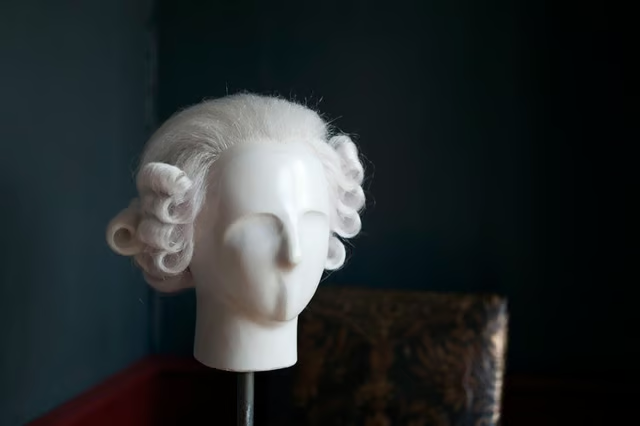
Wigs were a fashionable item in colonial America in the 18th century. The full-bottomed periwig, which had a cascade of curls, was by far the most popular in the early part of the century, but wigs decreased in size toward the end of the century. The wigs were commonly made of human, horse, goat, or yak hair; human hair wigs were the most expensive. They became popular because of European influence, a desire to appear older, and to distinguish among classes. Despite modern uses for wigs, like to cover up for baldness, hair loss, head lice, patchy hair loss, or as a way to try new hairstyles or fashion trends, colonial uses for wigs included symbolism for upper class society as well as an overall status symbol to others in society.
Powdered wigs started in France as the French used them to show status and placement in society’s ranks. The trend spread across Europe, and eventually to the American colonies during the 17th century. Colonial leaders, like Thomas Jefferson, John Adams, George Washington, and other founding fathers, wore wigs with hair powder and hair pieces to continue this trend of status showing within using long hair perukes over their own hair, or their natural hair. Other wearers were world leaders and figures, like Louis XIII, King Charles II, William Pitt, King Louis, and other England or Britain leaders through the 16th century to the 19th century. The modern term “bigwig” originated from these wig uses as well.
To Appear Older
Many men wore wigs to make themselves appear older. According to an article by Steven Mintz, wigs contributed to a patriarchal appearance. Husbands were significantly older than their wives and wore wigs and elaborate waistcoats to make themselves seem even older.
Distinguish Classes
Wigs were worn in colonial times to make class distinctions clear. The Colonial Williamsburg Foundation explains that even the color of wigs could indicate class and position. Professionals frequently wore gray wigs; tradesmen usually donned brown wigs; white wigs were reserved for judges and military officers. White wigs were also worn for formal occasions, but many men simply powdered a colored wig white because they did not own a white wig.
For All Occasions
It wasn't uncommon for men to own an assortment of wigs, as wigmaker Terry Lyons explains. There were wigs for evening wear, for everyday wear, for business, for riding. Wigs were made to match certain outfits; different styles and types of hair were also used for a variety of purposes and occasions.
Imitate Europeans
Wig fashion reached its height in America in the 18th century, but the trend began during the last half of the previous century. Louis XIV of France first wore the full-bottomed periwig, igniting a trend, according to theater professor Scott R. Robinson. Americans picked up the fashion because it was believed to dignify a person's appearance.
To Appear Conservative
The wearing of wigs became less common among the young and fashionable toward the end of the 18th century. Some conservatives continued to wear the wigs because of their polished and dignified look and to keep with the tradition of their forefathers.