
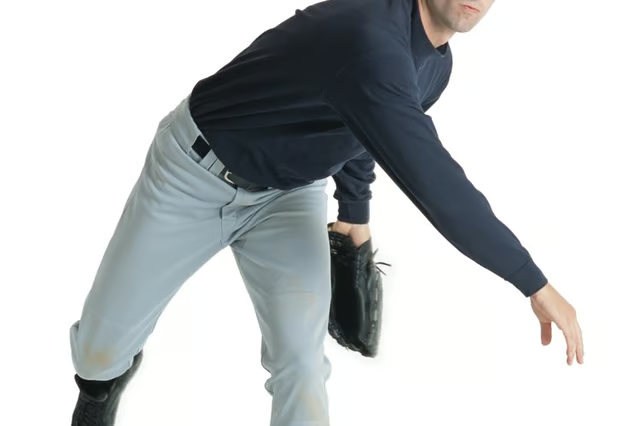


In the early 19th century, many Americans saw sports and entertainment as unnecessary hedonistic indulgences equivalent to vices such as drinking, swearing, immoral sexual behavior and gambling. However, by the late 19th century, people began accepting leisure and play and the popularity of sports and entertainment grew at a rapid pace.
Technology, Teams and Transportation
Historians see a link between technological innovation and the increased popularity of sports. For example, the development of the telegraph and the telephone helped newspapers report events in other cities while new forms of transportation such as trains helped athletic teams travel to distant sporting events. Mass transit such as streetcars helped patrons reach sporting venues. The sports themselves were also improved by new technology. Light bulbs helped light indoor sporting arenas. The creation of vulcanized rubber improved equipment such as balls and bicycle tires. In the 1880s, Edison's invention of the safety bicycle spawned a bicycling fad.
Amateur Sports
Amateur sports were often divided by class. Wealthy amateurs joined elite athletic clubs and participated in expensive sports such as golf and tennis as way of gaining recognition and social prestige. Colleges and universities developed competitions for rowing, football, baseball and track and field. The long hours and low wages of American factories limited working class amateurs' access to sports. When they could, they participated in activities that fit in with urban life such as basketball, boxing and billiards. When the modern Olympic Games began in 1896, it was one of the few venues where wealthy and working class amateurs competed together in events such as track and field, boxing and swimming.
Professional Sports
The late 19th century also saw the development of professional sports. The major professional sports of the day were baseball, boxing and horseracing. The first professional baseball teams were formed in the 1860s and the first professional league, the National Association of Professional Baseball Players, formed in 1871. It was replaced by the National League in 1876. In 1882, the National League merged with their rival the American Association in 1882. Prizefighting, or boxing for money, was illegal throughout the country until the 1890s. The most famous fight of the 1890s was Jim Corbett's 1892 victory over John L. Sullivan. Popular before the Civil War, horseracing was revived in the late 1860s by the political elite. However, by the early 1900s most states except Kentucky and Maryland had closed their tracks because of gambling.
Follies and Ferris Wheels
In the 1880s, wages increased and people had more leisure time. A wide range of entertainment developed to fill people's free time. Vaudeville was a popular form of theater where actors, comedians, magicians, acrobats and singers performed a variety of comic and musical acts as part of a single show. In the late 1800s, New York's Coney Island was transformed from the site of casinos, brothels and saloons into the country's first amusement park complete with restaurants, concert halls, Ferris wheels and hootchie kootchie girls, or exotic dancers. Other forms of entertainment included dance halls, night clubs and early movie theaters called nickelodeons.