


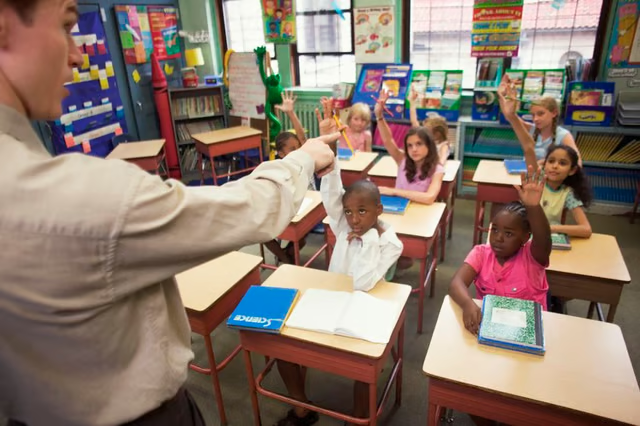
Millions of children in nations around the world enter classrooms each year unable to speak the same language as the teacher. In the United States alone, English language learners are one of the fastest-growing populations within the educational system. According to the Kids Count Data Center, the number of children ages 5 to 17 who speak a language other than English at home increased from 9.5 million in 2000 to nearly 12 million in 2015 (a 25 percent increase). Language barriers can have long-term negative effects on a student's academic performance.
Oral Language Development
According to Helen Pinnock, Senior Education Adviser at Save the Children UK, children are approximately 12 years old before they fully master their native language. Before this point, children are not able to pick up a second language as quickly as older children or adults. Children who begin learning a new language before they completely understand their first language have difficulty expressing abstract concepts or ideas in the second tongue. Ultimately, it is difficult for a child to succeed as a language minority student without having a solid foundation in his first language.
Emotional Factors
According to The Neurobiology of Affect in Language, John Schumann, a second language acquisition professor from the UCLA Department of Applied Linguistics, says many second language learners are afraid that they do not have a strong enough command of the language to express themselves and worry that they will be ridiculed if they try to communicate with others using the new language. This situation can cause significant emotional stress and may interfere with learning.
Parental Involvement
Parental involvement is often much lower among language minority families. These parents may be uncomfortable about coming into the classroom to talk with the teacher because they are not fluent themselves, so they might not be fully aware of how their child is performing in the classroom. Language minority parents cannot always help their children with homework, so homework assignments may not always be completed satisfactorily.
Academic Failure
In 2008, the United Nations Educational, Scientific and Cultural Organization (UNESCO) conducted research across 26 countries showing that over 50 percent of students who dropped out of school did not speak the language in which they were being educated. This applies to the United States as well. A 2012 report by the American Psychological Association noted that Latino students who spoke one language at home and another at school were at increased risk of graduating late or dropping out of high school.
Lifting the Barriers
Language barriers are a difficult hurdle, but they can be successfully overcome. Classroom teachers can help by using techniques such as highlighting and discussing academic vocabulary before introducing the lesson, providing the same material at differentiated reading levels, and by using clear, simple language when describing new concepts. One of the most important things a teacher can do to help language-minority students is to build relationships with her students and their families. This builds trust and respect, which is a necessary foundation for learning.