
- National Book Month activities for students: 8 reading ideas
- Who this guide is for
- Choose by time, scale, and goal
- National Book Month classroom activities: one class period to one week
- Reading response activities for students that build over several weeks
- Discussion and optional community events
- What to do next
National Book Month activities for students: 8 reading ideas
National Book Month activities for students don't need a full curriculum overhaul to be worth doing. This is a planning guide, not a report on a single new development: it adapts recommendations from NEA's Read-In guidance, normally built around Read Across America each March (NEA, published earlier this year), for classrooms planning an October reading celebration or any other reading month already on a school's calendar. It's written for classroom teachers, with adaptation notes for tutors, homeschool educators, and parents running smaller versions at home.
Rather than promising a formula that guarantees engagement, this guide uses a simple filter: does the activity include a shared reading moment, a real choice for students, or a chance to talk and respond afterward? A 2024 study of one eighth-grade class in a Midwest urban public school found that offering choices in reading material, assignment type, and collaboration was linked to higher engagement in that group (Johnson, Networks, 2024). That's one classroom's data, not proof that any specific format below "works," so it's used here only to justify building choice into these activities. Because NEA built these formats for a different observance, adapt them freely, but skip calling one an "official" October program when pitching it to a principal or a family.
Who this guide is for
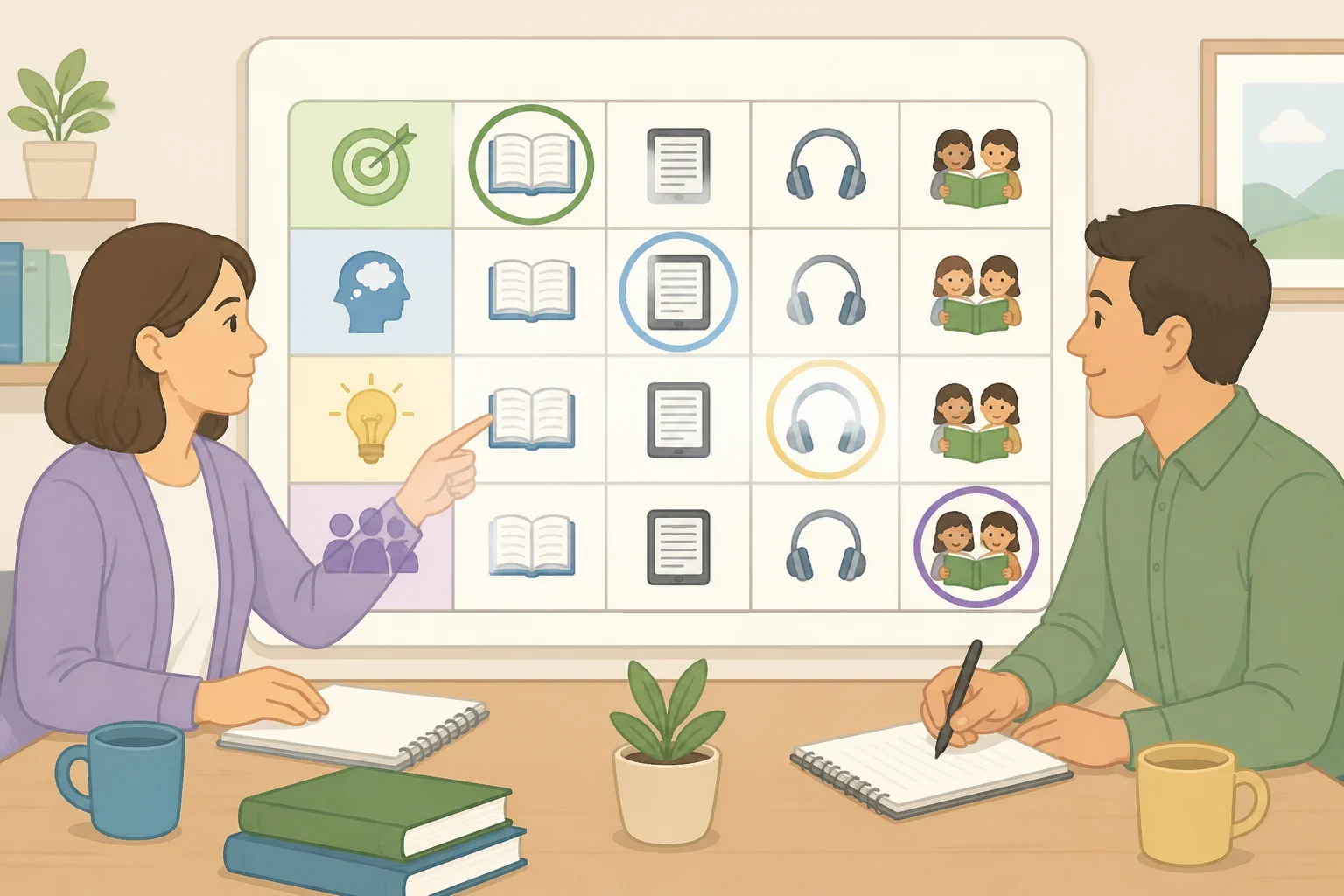
The eight activities span single-period options and multi-week commitments. Each entry notes the grade levels it suits best, a built-in choice, what to prepare, an accessibility variation, and a specific purpose, so an activity gets matched to a goal instead of chosen because it sounds festive.
Choose by time, scale, and goal
Before picking an activity, settle four things: the goal (community, discovery, creative response, or discussion), the group's access to books and space, how students will get a genuine choice, and how much planning time is realistic this month.
Time and coordination matter more than a theme. These are suggested planning ranges, not fixed rules:
- One class period: Classroom Read-In, Creative Response Session, Poetry Read-In & Open Mic
- A few days to one week: Student-Led Text Talks, which revisit a text across several short sessions before a closing discussion
- Several weeks: Cross-Grade Reading Buddies, Books-From-Every-State Challenge
- Schoolwide or community event: Read-In Marathon, and the optional Read-In for a Cause
When building reading lists for any of these, consider the National African American Read-In's emphasis on African American books and authors, a model established in 1990 by the Black Caucus of the National Council of Teachers of English as the first and longest-running event centered on diversity in literature (NEA, 2026). Apply that same intentionality to other underrepresented voices instead of defaulting to familiar titles.
Check your school's approval, supervision, and space-use requirements before finalizing outdoor gatherings, schoolwide events, or anything involving guest visitors or off-campus space. It's easier to confirm early than to walk back a promise already made to students.
National Book Month classroom activities: one class period to one week
1. Classroom Read-In, indoors or out
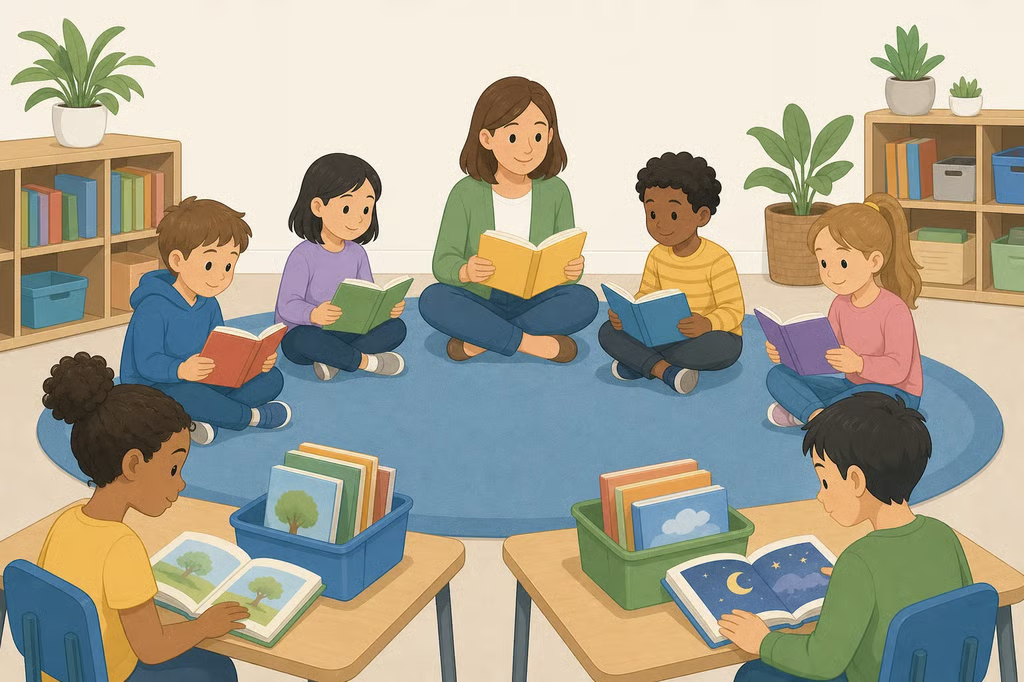
Works at any grade level. Students bring or select their own reading material for what NEA calls "a communal, intentional act of reading together" (NEA, 2026). They read silently or in pairs for a set block, then close with a brief turn-and-talk on one moment that stood out.
- Choice: what to read.
- What you need: classroom or library books, plus an audio or partner-reading option for students without their own copy.
- Accessibility: keep a rotating text set on hand for students who arrive empty-handed, and let anyone who'd rather not speak aloud jot a one-line note instead.
- Purpose: give students sustained reading time and normalize talking about a text before it's finished. Taking the session outside adds variety, but plan for weather and confirm supervision first.
2. Read-In Marathon, schoolwide and cross-subject
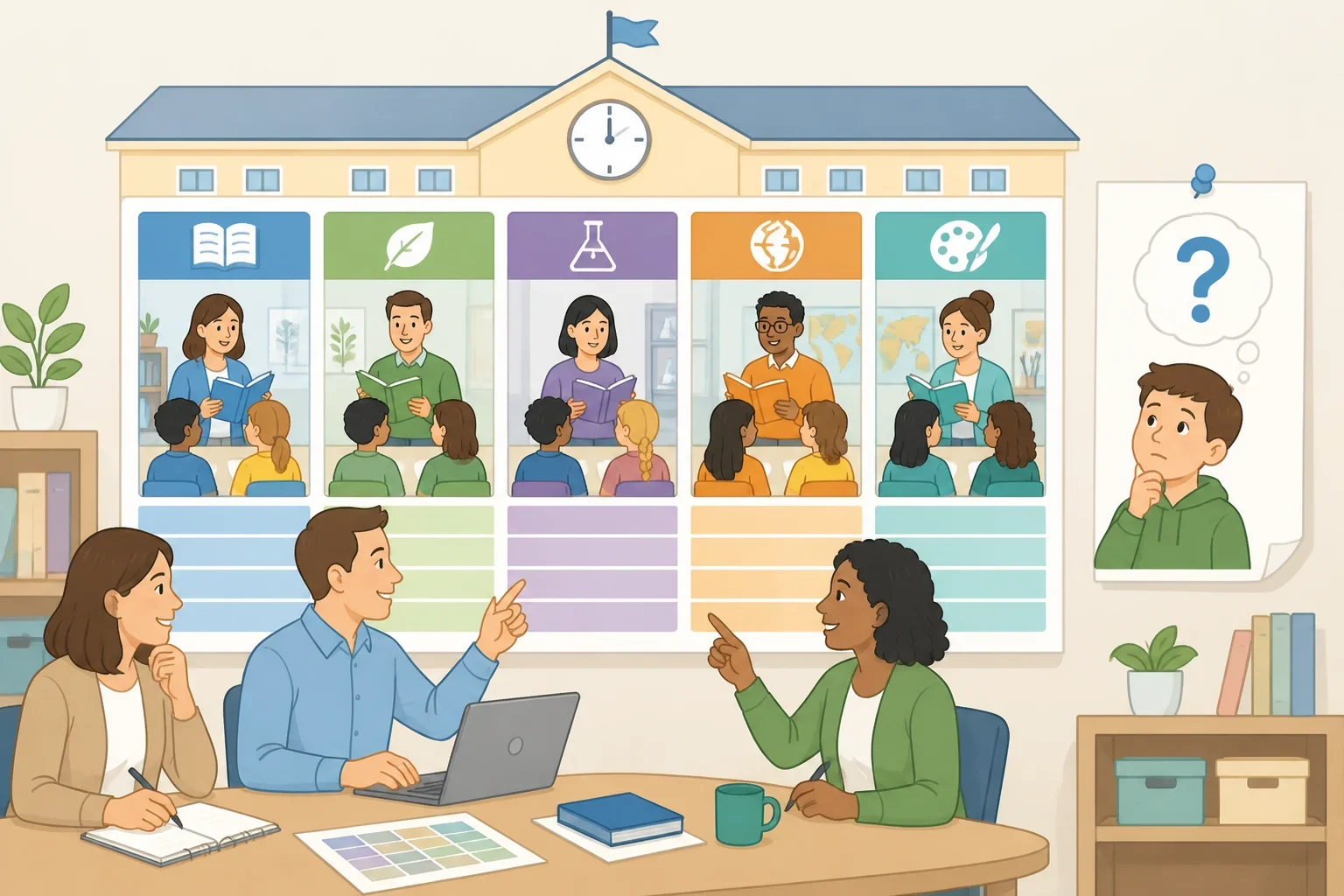
Works at any grade level, schoolwide. NEA describes this format as an all-day, schoolwide celebration where reading happens "across spaces, subjects, and moments" (NEA, 2026). Each participating class picks a reading block tied to its own subject, a science article, a historical account, a poem, and closes with a question posted somewhere students will see it.
- Choice: which text each class selects.
- What you need: participating teachers, shared scheduling across classes, and subject-appropriate texts lined up ahead of time.
- Accessibility: if getting every teacher on board this month isn't realistic, scale the idea down to one grade-level team instead of the whole building.
- Purpose: show students that reading isn't confined to English class. This adapts the broader idea of supporting literacy across the school day, drawn from a Mississippi literacy partnership; it's not an evaluation of this specific activity (IES/REL Southeast, 2023).
3. Poetry Read-In and open mic
Works best for middle and high school classrooms. Gather a range of poets and forms in advance, then give students time to select or draft a short piece. NEA frames this format as a way to expose students to varied poets while inviting original writing (NEA, 2026).
- Choice: read a favorite poem or share original work.
- What you need: a pre-screened collection of poems and a nonperformance option for students who'd rather not read aloud.
- Accessibility: build in a "pass" option for the open mic, let students submit a recorded reading or have the teacher read the piece anonymously, and for elementary classrooms, swap the open mic for a shared choral reading of short poems instead of asking younger students to perform solo.
- Purpose: practice identifying tone and figurative language, then explaining one choice the poet or student writer made.
4. Creative response session: playlists and song parodies
Suited to middle and high school groups. Students can select five to 10 songs that echo a book's emotions or ideas and explain each connection, or write a song parody retelling a plot or content-area topic in pairs with one student acting as "singer" (NEA, guidance updated last year).
- Choice: song selection or parody topic.
- What you need: lyric and content screening in advance, plus a school-approved way for students to access music.
- Accessibility: a written explanation or visual mood board can substitute for a live performance.
- Purpose: practice explaining a specific text-to-song connection in a sentence or two. Keep this ungraded and low-stakes.
Reading response activities for students that build over several weeks
5. Cross-grade reading buddies
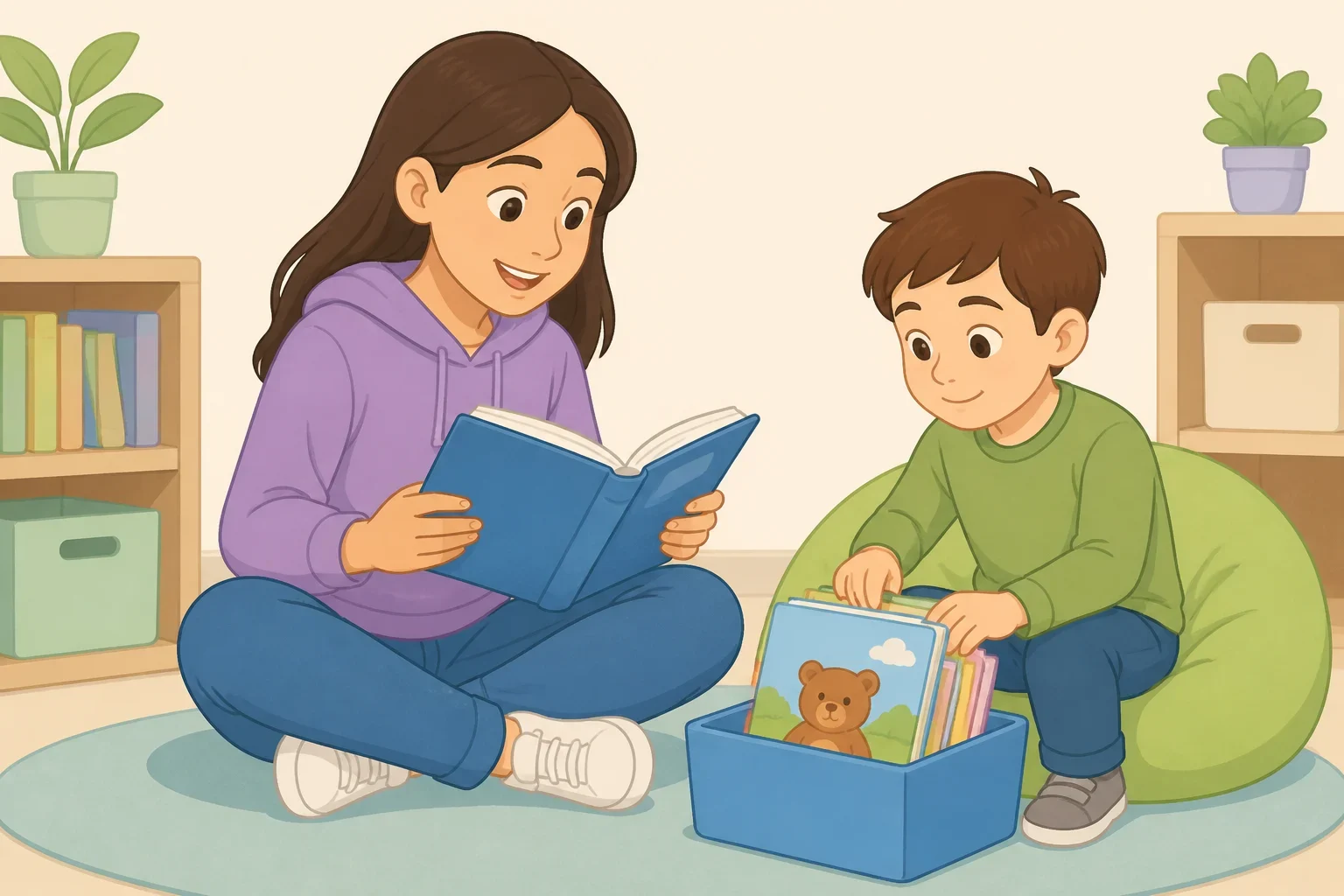
Works for elementary-middle or middle-high pairings. Match pairs by grade level and, where possible, teacher recommendation rather than random assignment. NEA notes that this format works best when pairs "meet regularly over a period of time and build a connection" rather than meeting once (NEA, last year). For example, you might schedule several weekly meetings; treat any specific number of weeks as a planning estimate, since NEA doesn't specify one.
- Choice: the younger partner chooses the book from a pre-screened set.
- What you need: adult coordination, a pairing plan, and a backup plan for absences.
- Accessibility: define "level-appropriate" concretely by pulling from the school library's leveled collection or asking a reading specialist or librarian to flag titles matching the younger partner's independent reading level, not just their grade. Audio-recorded read-alouds can fill a missed week if scheduling gets messy.
- Purpose: set a fluency-practice goal for the older student and a relaxed listening goal for the younger one.
6. Books-from-every-state challenge, scoped down
Works at any grade level. NEA's Read Across the States format calls for gathering books tied to all 50 states and Washington, D.C. (NEA, 2026). To avoid a superficial book display, scope it down for the classroom: assign one state or a curated regional set per small group rather than sourcing every state, unless the school library already has that range on hand.
- Choice: which state or book each group tackles next.
- What you need: a consistent definition of what counts as a state-connected book before students start browsing.
- Accessibility: decide the standard in advance (a book can qualify by setting, by the author's connection to the state, or by where it was published) and apply it consistently. Schools with a smaller collection can start with states or regions connected to students' own backgrounds.
- Purpose: build background knowledge. Reading Rockets frames background knowledge as a support for learning capacity, not just trivia, which gives this activity a purpose beyond decorating a map (Reading Rockets, 2023). A sequence adapted from that source works over several weeks: introduce the state or region, read and discuss a related book, do one hands-on or local-connection activity, then let students explore further on their own.
Discussion and optional community events
7. Student-led text talks with a take-home book
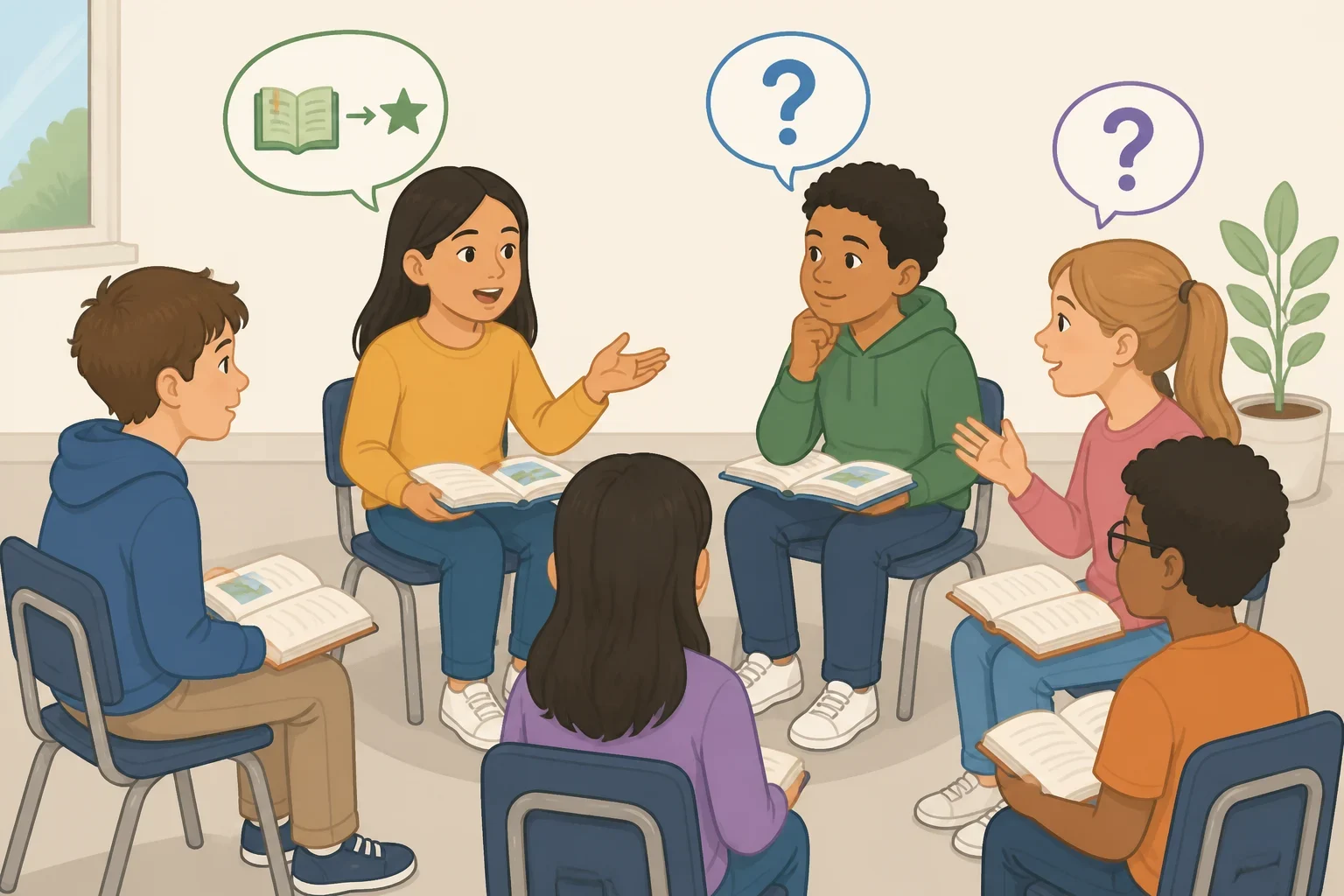
Works at any grade level, as a closing activity. Revisit a short shared text across a few sessions before the discussion, then lean on open-ended questions instead of simple comprehension checks. A 2022 Grand Valley State University graduate project describes this structure: open-ended questioning, repeated interaction with the same text, and a framework called "Accountable Talk," as a practice-oriented approach to discussion rather than a proven comprehension outcome (Green, GVSU graduate project, 2022, citing Michaels et al. and Fisher & Frey).
- Choice: discussion topic and, when possible, take-home title.
- What you need: a short common text every student can access and a discussion routine, a set of open-ended questions works well.
- Accessibility: students who'd rather not speak can submit a written or drawn response instead, and elementary classrooms can swap open-ended discussion for a retelling circle or a quick drawing response. Book distribution needs a funding source; a swap or donated-book table may offer a lower-cost alternative, depending on supply.
- Purpose: practice citing a specific detail from the text and responding to a peer's point, not just summarizing plot. Close by letting every student choose a book, following NEA's Big Read-In model (NEA, 2026).
8. Optional extension: Read-In for a Cause
Labeled an optional extension rather than a standard classroom activity because of its scope. It borrows from the tradition of sit-ins, gathering students and staff in a shared space, a park, library, or public building, to read materials connected to a cause the school community cares about (NEA, 2026).
- Choice: how the cause is selected and which materials students bring.
- What you need: administrator approval, a confirmed location, supervision, and a plan for communicating the cause to families.
- Accessibility: if a full schoolwide gathering isn't realistic, run a smaller version within one classroom or advisory period instead of a public space.
- Purpose: connect reading to a shared community concern. Plan this earlier than a classroom-only activity, since it may involve permissions, space, and family communication, and confirm how the cause itself will be selected before promoting a date.
What to do next
Among these eight, the Classroom Read-In carries the lowest setup barrier, Student-Led Text Talks give the clearest built-in discussion focus, and the Read-In Marathon or Read-In for a Cause need real schoolwide coordination and earlier lead time. Start by picking one goal from the list above, then take stock of the books and space actually available. Choose one activity that matches the setup time on hand, assign a specific closing response for it, whether a note, a share-out, or a short discussion, and confirm any needed permissions or book-access budget with a librarian or administrator before finalizing dates with students and families.