
- Frankenstein historical context: science and Shelley's life
- How the novel was written: the 1816 Geneva ghost-story contest
- Scientific influences on Frankenstein
- The debate over what counts as being alive
- Reading Shelley's life into the text, carefully
- A check on Frankenstein and the Industrial Revolution
- What to check before writing about this
Frankenstein historical context: science and Shelley's life
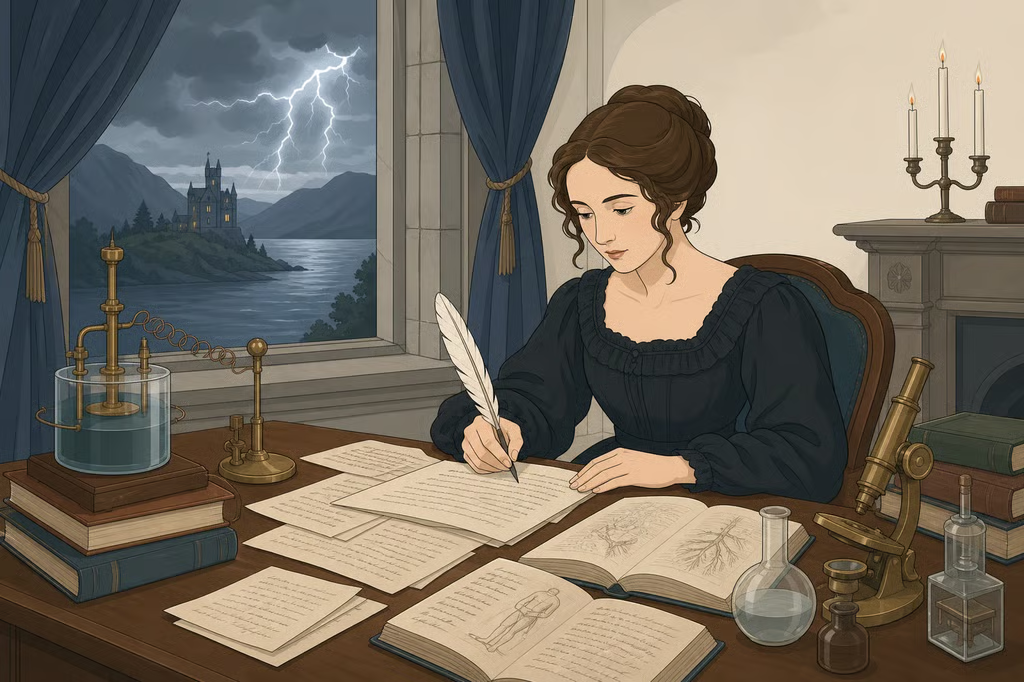
The 1818 novel never describes a lightning bolt reviving the Creature, the image most people picture first. Victor says only that he "collected the instruments of life" so he might "infuse a spark of being into the lifeless thing," language that IEEE Technology and Society's review of Sharon Ruston's research ties to real, unresolved scientific debates of the 1810s rather than one dramatic jolt of electricity (IEEE Technology and Society). That gap between the text and its film adaptations is a good place to start with Frankenstein historical context: what Mary Shelley actually wrote, rather than what later retellings added.
Shelley began the novel at 18, during a cold, wet summer near Geneva in 1816, when she, Percy Shelley, Lord Byron, and John Polidori agreed to compete over who could write the scariest ghost story, an account she gave herself in the 1831 introduction (NYPL). She later wrote that she wanted to "curdle the blood, and quicken the beatings of the heart," in keeping with the Gothic tradition she was writing into (NYPL).
This guide covers the contexts that actually matter when studying the 1818 text: the Gothic circumstances that produced it, the contested science of what makes something alive, the social pressures in Shelley's own life, and what the Industrial Revolution comparison can and cannot prove. Students analyzing the novel, teachers building a unit, and readers who want something sturdier than movie summaries should find enough here to start real research.
How the novel was written: the 1816 Geneva ghost-story contest
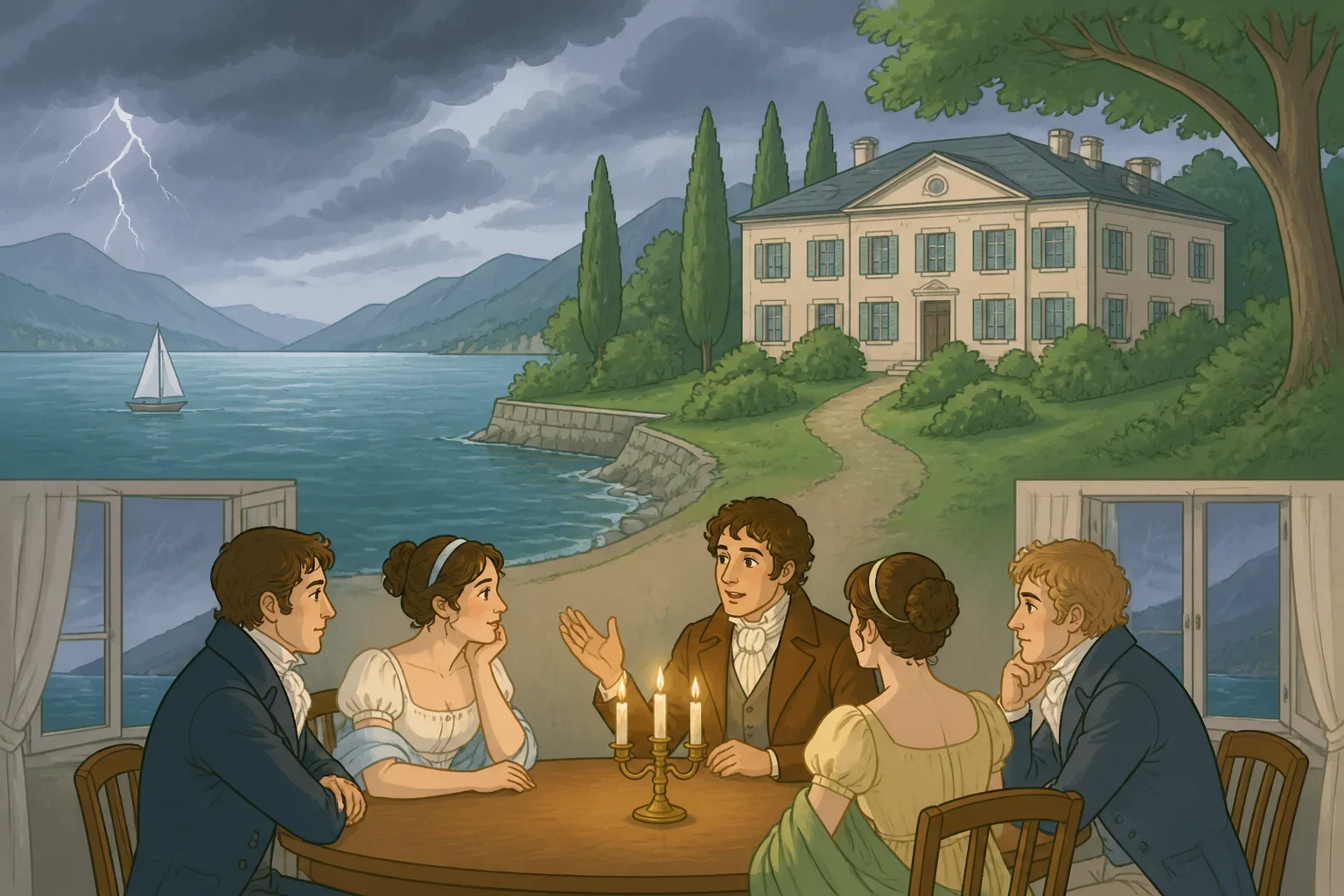
Before Frankenstein; or, The Modern Prometheus is "about" anything, it comes out of a specific, strange stretch of days. Shelley, Percy Shelley, Byron, and Polidori spent that cold, wet summer near Geneva, and by Shelley's own later account, the group agreed to compete over who could write the scariest story (NYPL). Mary Shelley's entry became the story now known simply as Frankenstein.
The subtitle, "The Modern Prometheus," points to a myth worth knowing before analyzing the text. In Greek myth, Prometheus was a Titan who defied the Olympian gods by stealing fire and giving it to humanity, a theft the gods punished by chaining him to a rock where an eagle ate his liver each day, only for it to grow back overnight so the punishment could repeat (IEEE Technology and Society). The comparison to Victor is direct: both take something meant to stay out of human hands and pay for it. Shelley wasn't even the first to make that comparison; philosopher Immanuel Kant had titled a 1775 essay "The Modern Prometheus" as a warning about Benjamin Franklin's electrical experiments, describing Franklin as a man who had tried to "disarm the thunder" (IEEE Technology and Society).
In her 1831 introduction, Shelley also described an eerie dream as central to the story's origin (NYPL). That introduction and the Geneva contest are the documented starting point. Interpretation should build outward from there, not replace it.
Scientific influences on Frankenstein
No single experiment or breakthrough explains the novel. Several overlapping, unresolved investigations into what animates a body fed into it, which helps explain why Victor's own method stays unspecified on the page.
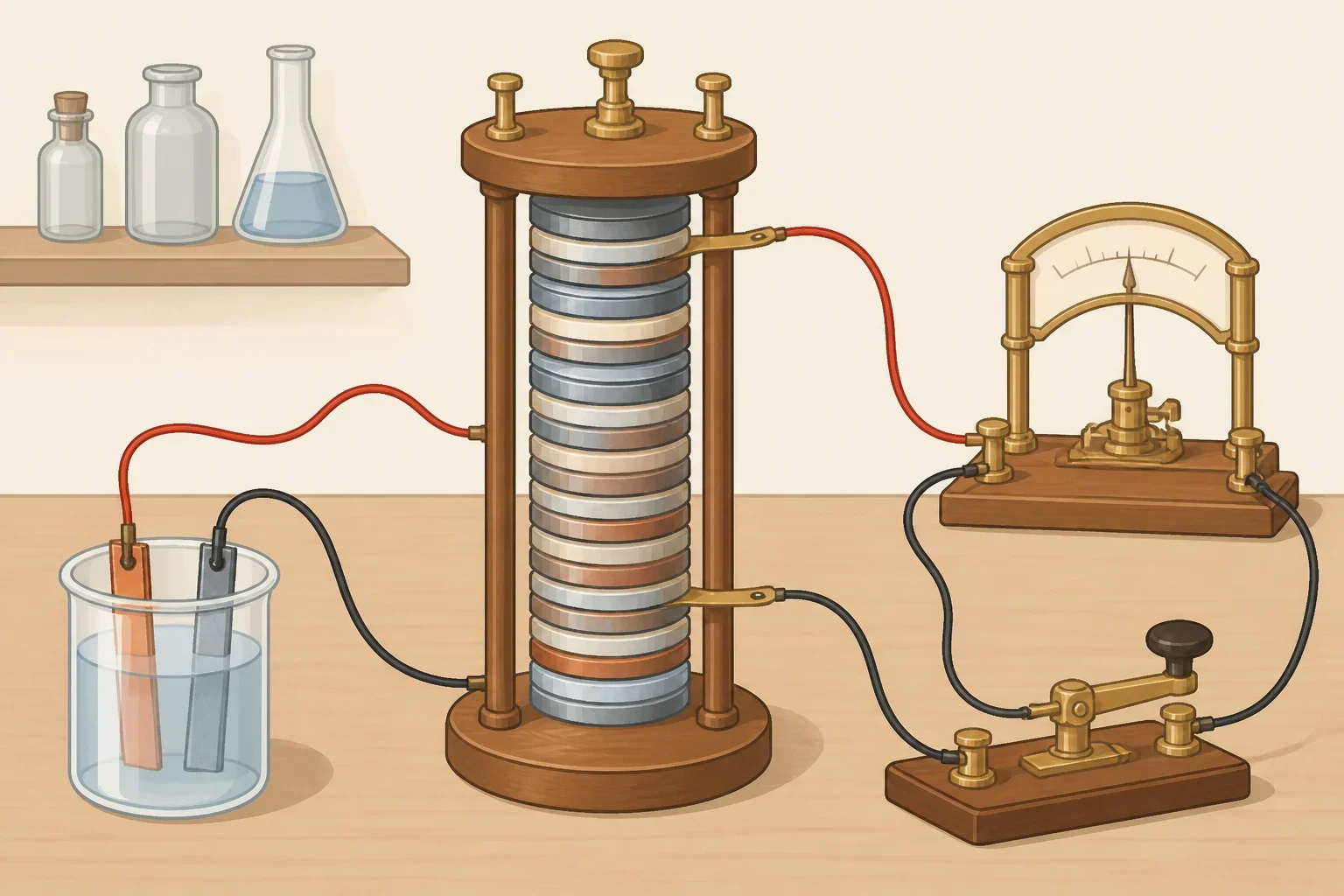
Luigi Galvani observed in 1780 that electrical stimulation could make a dead frog's muscles twitch, and Alessandro Volta later built the voltaic pile, an early battery that solved a real problem: the static-electricity machines researchers had relied on before it were not always reliable (IEEE Technology and Society).
Electricity was not an abstract topic in Shelley's household, either. Percy Shelley kept air pumps and electrical machines in his rooms as a student at Oxford, where he had enrolled in 1810 (IEEE Technology and Society). The novel carries a quieter trace of that same interest: Victor recalls becoming fascinated with an air pump as a boy, and the Creature later kills by strangulation, a detail that echoes research building at the time around air, and eventually oxygen, as essential to life, following earlier work by Joseph Priestley and Antoine-Laurent de Lavoisier (IEEE Technology and Society).
Spectacular resuscitations of drowning or suffocation victims were widely publicized at the time, promoted by groups such as the Royal Humane Society (IEEE Technology and Society). Victor's method breaks from that popular narrative rather than repeating it. He assembles the Creature from human and animal parts using the chemistry, electricity, and alchemy available to him, rather than reviving a single corpse (IEEE Technology and Society).
The debate over what counts as being alive
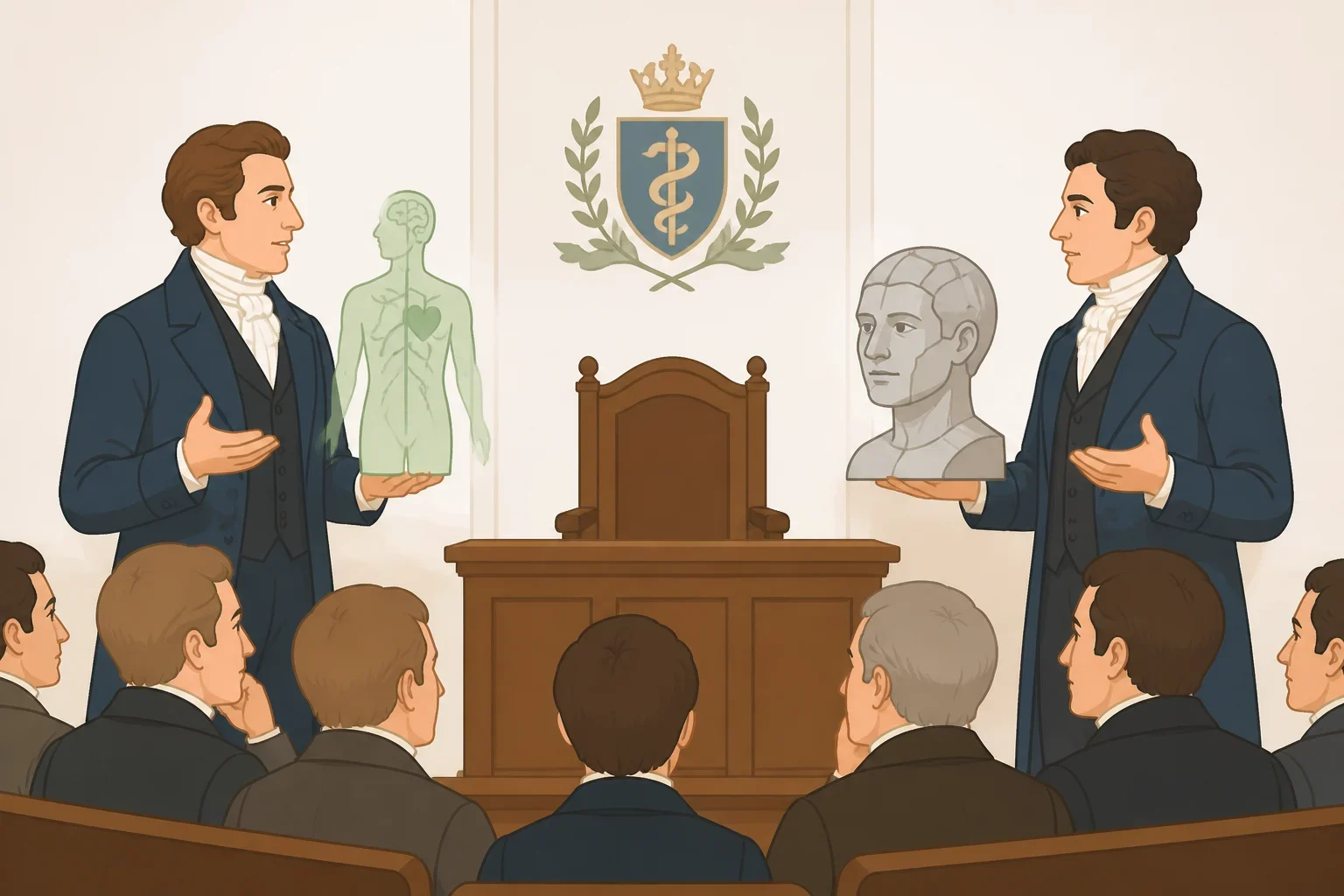
Starting in 1815, John Abernethy and William Lawrence, two faculty members at the Royal College of Surgeons, argued publicly over the nature of life (IEEE Technology and Society). Lawrence took the materialist side, maintaining that life was simply matter organized well enough to reproduce itself and sense its surroundings, a position set directly against Abernethy's.
That position cost him his job. Lawrence lost his post at the Royal College of Surgeons over the dispute, a reminder of how much was actually at stake in the questions Victor pursues on the page (IEEE Technology and Society).
The Creature's own arc keeps the underlying question open without settling it. It teaches itself to speak and read, reasons through why it was abandoned, and only then turns to violence, eventually killing an entire family along with Victor's father and brother before finally killing Victor himself (IEEE Technology and Society). That mix of humanlike development and destruction never settles whether Lawrence's materialist view, matter organized well enough to reason and feel, fully accounts for what the Creature becomes. The novel does not seem interested in settling it either.
Reading Shelley's life into the text, carefully
At 18, Shelley wrote of a student who assembles a being from human remains and then abandons it. In 1974, literary critic Ellen Moers proposed reading this plot as a "birth myth," an argument built from Shelley's documented experiences rather than a claim Shelley made herself about her own intentions (NYPL). Moers's reading, later developed further by feminist scholars, places abandonment alongside creation at the center of the novel.
The text itself gives that reading somewhere to land. The moment the Creature opens its eyes, Victor recalls that "breathless horror and disgust filled my heart," and he flees rather than caring for what he made, the abandonment Moers places at the center of her reading (NYPL).
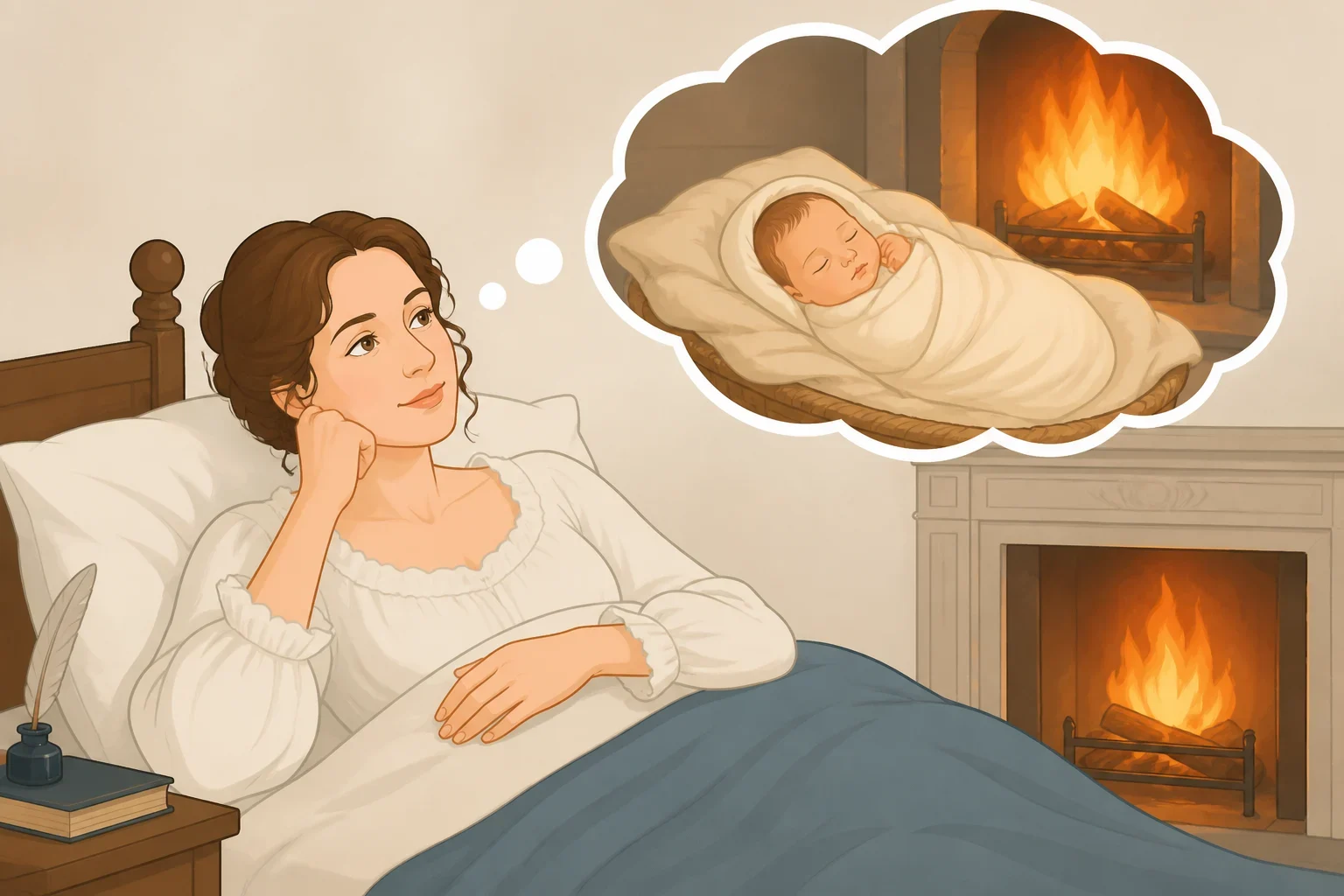
Separate from Moers's argument, some documented biographical facts help explain why later scholars have found that reading compelling. Shelley's mother, Mary Wollstonecraft, died of a postpartum infection ten days after giving birth to her. Shelley herself gave birth prematurely in February 1815 to a daughter who died weeks later, and she recorded a dream that the baby had revived after being warmed by a fire (NYPL).
Facing the social disapproval that illegitimate children and their mothers faced in this period, Shelley and Percy Shelley chose to marry in late 1816, in the months after Percy's first wife, Harriet, and Shelley's own half-sister, Fanny Imlay, both died by suicide within months of each other, according to the New York Public Library's account of this period (NYPL).
A check on Frankenstein and the Industrial Revolution
When Frankenstein comes up alongside the Industrial Revolution, the strongest documented connections point to later Victorian culture, not to Shelley's own writing period. A 2014 essay preserved in the Science Museum Group's current catalogue describes how, by the mid-1800s, a well-established view had emerged crediting particular inventors and their machines with driving British industrialization. Bennet Woodcroft helped preserve industrial artifacts at London's Patent Office Museum during this period, where James Watt and the steam engine were central objects of attention (Science Museum Group).
Chronology matters here. Woodcroft's commemorative work, and the broader culture of inventor-worship around it, took shape decades after Shelley wrote her novel between 1816 and 1818. A later cultural trend cannot, by itself, prove influence on an earlier text. The comparison works only as a contrast: Victorian commemorative culture can be read as celebrating heroic inventors, while Frankenstein, read as literary allegory, tells a story of catastrophic consequences following unchecked ambition.
What to check before writing about this
Confirm what the assignment prompt or rubric is actually asking for. Scientific, philosophical, and social context each point to different sources and different arguments, and blending them without saying so tends to read as unfocused.
- Cite primary textual details, such as Victor's own wording or Shelley's 1831 introduction, rather than a secondhand paraphrase of the plot.
- Name the scholar behind an interpretation, such as Ruston on the science or Moers on the maternity reading, rather than presenting it as settled fact.
- If industrialization comes up, state plainly whether the source discusses Shelley's 1816-1818 writing period or a later Victorian retelling of it.
- Ask a teacher or professor if the assignment calls for a specific critical lens, since expectations vary by class and program.
For a paper, choose one lens, locate a passage in the 1818 text, and pair it with a source that addresses that particular historical question. Skip the Industrial Revolution comparison unless the source actually demonstrates a connection to Shelley's writing period, not just a later Victorian one.