


Every culture has its own particular style of communication. Within that framework, however, there are overlaps where Indian language groups share similarities. With the Indians in North America, the paramount consideration is to think before speaking and to respect the elders of the tribe because they are the ones who carry the wisdom and pass it on to the next generation.
Nonverbal
For American Indians, silence is truly golden and often says more than words. Nonverbal communication style is dependent on knowing your status and relative relationship to everyone else. Looking an elder in the eyes, for instance, is considered rude. Personal space -- at least an arm's length -- is the required social distance in the Indian style.
Verbal
Verbal communication in terms of languages varied from one Indian nation to another. Although the Native American languages can be separated into linguistic groups, they are further subdivided into tribal languages. The Iroquoian language, for instance, contains nine subgroups and includes the Cayuga, Mohawk, Onondaga and Oneida.
Talking Sticks
The communication style of the Indians followed a protocol. It was rude to interrupt someone who was speaking, and just because the person was silent for a while didn't mean he had finished what he had to say. Some tribes adopted the practice of having a "talking stick." As long as the individual held the stick, it was his turn to speak. When he finished he would hand the stick to the next person who wanted to say something.
Sign Language
Native Indians developed an intricate sign language system to allow them to communicate with people from other tribes. The Cheyenne could communicate with the Blackfeet or the Ojibwa. The sign for "long ago" was made by putting the palms of the hands together and then spreading them apart to indicate the time span.
Rock Paintings
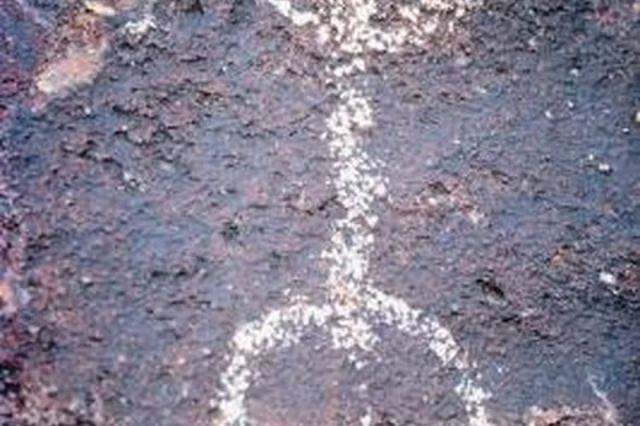
Another Indian style of communication was rock art. Pictographs are images drawn on rocks; petroglyphs are carved into the rock. These drawings commemorated events, depicted ceremonial practices and recorded maps of hunting areas. There is a high concentration of Indian rock paintings in Utah, Texas and New Mexico.
Markers
While it may have looked like a pile of stones to the untrained eye, the style of the way the rocks were positioned were like a written note to the Indian people. Markers were used to indicate who had passed that way or which direction the group was headed.