
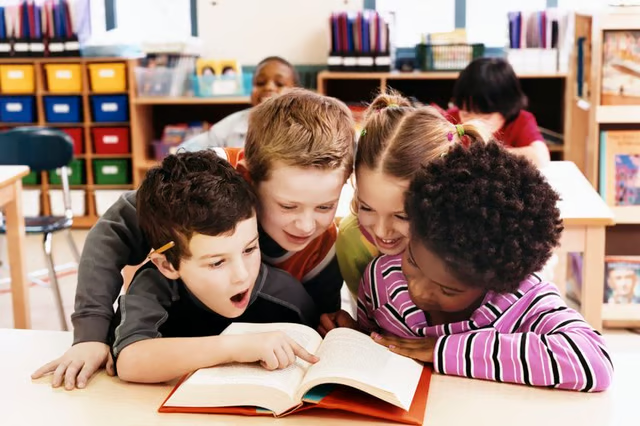
Learning centers are used by early childhood educators to teach important concepts in math, language and reading. Reading centers allow small groups of kindergartners to practice literacy skills with hands-on activities like manipulating letters, looking at and discussing books or playing rhyming games. Centers are an important piece of a kindergartner's early learning experiences.
Student Led
Reading centers are usually set up for children to work individually or in small groups of two to four children. Sometimes an adult is present to guide children, while at other times, students complete the work independently. Typically, the center has a variety of activities to choose from, giving the student the ultimate choice of what to work on. Learning centers are ideal in the classroom because students at different levels can complete activities based on personal abilities and preferences. For example, one child might start making words with a set of letter tiles while another will sort letters into like piles.
Motivational
Young children are motivated and eager to learn when they have the ability to choose which direction to take their learning. According to the Region 4 Education Service Center in Houston, students' motivation to learn and succeed is directly affected by learning activities that are engaging and appropriately challenging. Reading centers provide the opportunity for students to take risks in learning by trying new or different challenges at their own pace. Centers don't require children to keep up with the rest of the class, complete tasks they're not developmentally ready for or study material that they have already learned.
Hands-on
Reading centers go beyond teacher-led instruction, giving children a chance to solidify their knowledge of important concepts like letter names and sounds, rhyming or sight words. Centers give children a chance to touch and match letters, build words with letter tiles, read books at the appropriate level, listen to books on tape, play reading games or practice writing their letters with a variety of different markers, crayons, pencils or paints. Hands-on games and activities keep children engaged in the learning process.
Diverse
Every kindergarten class is made up of a diverse set of learners. Some children come in knowing how to read a handful of words, while others might still be struggling with the alphabet. Reading centers cater to children at all levels with open-ended activities that are suitable for a variety of readiness levels. Common materials include a set of letter tiles for children to manipulate; picture cards to identify beginning or ending sounds; sight word cards to read, copy or trace; books at various reading levels; and audio books. A kindergartner who is ready for independent reading can grab a book and read, while another who isn't quite ready to read can follow along with an audio book.