
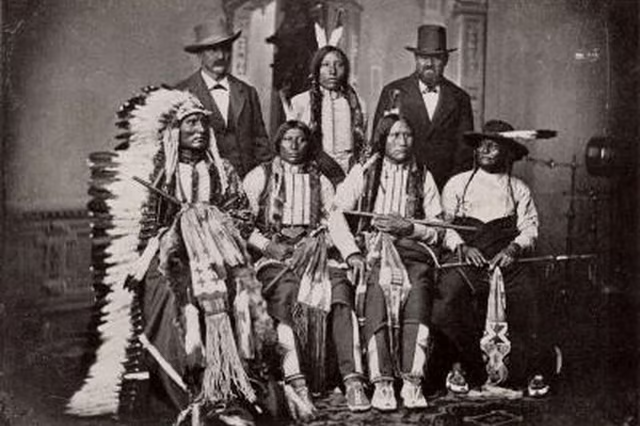
During the 1800s, the American government endeavored to assimilate Native American tribes into European-American culture. Acculturation and assimilation in this case meant the government expected Native Americans to disband their tribes and abandon their ancestral lands and customs. Several laws were enacted to force Native Americans to adopt the new social order.
Background: The First Great Removal
The 1800s were a time of great upheaval for all Native American tribes. The process of relocating tribes to new areas began with the Indian Removal Act of 1830, during the Andrew Jackson administration. This act required all Native tribes to relocate west of the Mississippi River. These original attempts to deprive indigenous people of their native lands took the form of treaties. Later in the century, the strategy of the U. S. government would change dramatically.
Indian Appropriations Act
In 1871, Congress passed the Indian Appropriations Act. Indian tribes would no longer be treated as sovereign nations. Treaties could no longer be negotiated between any native peoples and the American government. The act did not retroactively nullify any previous treaties made with native tribes.
Reservations
As a result of this and other previous legislation, Native-American land holdings were taken by the federal government. Western Native-American tribes were required to move to one of two reservations. Northern tribes were moved to what is now western South Dakota. Southern tribes were relocated to present-day Oklahoma. This wave of relocation constituted the Second Great Removal.
Dawes Act
In 1887, Congress passed the Dawes Severalty Act. This act prohibited reservation land from being given to tribes or nations. All lands must be distributed to individual Native Americans only. The head of each family was allotted 160 acres of land. The remaining land was sold to white settlers. This act dramatically reduced the amount of reservation land held by Native Americans. Eighty percent of the land was in non-Native hands within 20 years. The act also served to further dissolve ties within tribes due to the separation of lands.