



What are the Differences Between the American and French Revolutions?
During the last quarter of the 18th century, two countries fought revolutionary wars that altered the course of history by fracturing the traditional political systems of monarchy, colonies and feudalism. Rooted in the fight for freedom and liberty for every individual, the American Revolution (1775-1783) and the French Revolution of 1789 followed vastly different paths toward obtaining similar goals. Often compared because of similarities in ideology, era and impact, dissimilarities exist between the American Revolution and the French Revolution in context, complexity and outcome.
Colony vs. Country

Location is a key difference between the two wars. The American Revolutionary War took place in thirteen colonies, in North America, an ocean away from its ruling monarchy in Great Britain, in Europe. The French Revolution took place within France itself, an action that directly threatened the French monarchy.
Freedom vs. Overthrow

The difference in location also affected the intent of each revolution. American revolutionaries were not looking to change the British empire’s monarchy; they simply desired to be free from its rule using Enlightenment liberties and Enlightenment ideas about natural rights and human rights. On the other hand, the cause of the French revolution revolved around French fighters demanding fundamental changes be made to the way they were governed. In essence, Americans intended to break away to form a new government and establish a new country and a new form of government within their own country, whereas in France, the intent was to replace or change the existing government.
Lexington vs. the Bastille

Both revolutions began with battles kindled by the needs of leaders opposed to the established government, however, the battles themselves were dissimilar. In the American colonies, minutemen gathered in Lexington on April 19, 1775, to prevent British government troops from capturing Patriot leaders and arms. In that brief skirmish, famous for “the shot heard 'round the world,” only one British soldier was injured, while 18 Americans were killed or wounded. The French Revolution began with the storming of the Bastille on July 14, 1789, to rescue imprisoned revolutionary leaders. The all-day siege and capture of the royal fortress by a mob of revolutionaries resulted in more than 100 dead or wounded rioters, as well as the murder of the fortress’ military governor, Bernard-Jordan de Launay.
Locke vs. Rousseau
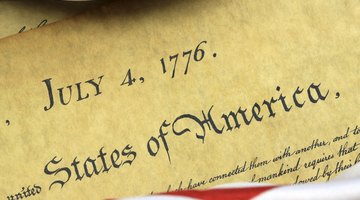
The members of the Continental Congress in the American colonies drafted the Declaration of Independence to separate themselves from Britain and to express their belief that every individual has the equal opportunity right to “life, liberty and the pursuit of happiness.” The American ideology was based on the works of British philosopher John Locke. France’s Declaration of the Rights of Man and of the Citizen was founded on the teachings of French philosopher Jean-Jacques Rousseau, written with the aim to end the social and political inequalities of the time of King Louis XVI.
Representation vs. Repression

Taxation played a role in both wars, however, the people’s objections to the taxes in each country were dissimilar. Americans objected to the fact that colonists had no say in how the collected taxes were spent, or taxation without representation. However, American revolutionaries themselves, like George Washington and Thomas Jefferson, were financially successful and lived relatively comfortable lives. In contrast, the revolting French peasants were starving and destitute as a result of over-taxation, and thus their fight was in part driven by survival instincts. French revolutionists also objected to the inequality in the taxation -- French clergy and noblemen were taxed less than commoners.
Class Divisions vs. Ideology
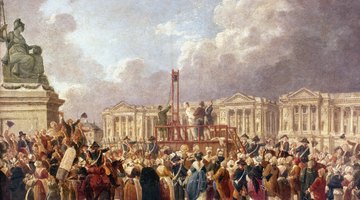
A significant difference exists in the categories of people fighting in each revolution. In France, the combatants were largely separated by economic classes – the rich from the poor, the lower class or the third estate to the upper class. For Americans, the separations were ideological, in that the warring parties divided over loyalty to the crown and absolute monarchy and the desire for freedom for American colonists. In some cases, differing political and philosophical views led to divisions within families and resulted in some soldiers fighting brother against brother in many colonies like New York.
Concise Victory vs. Inconclusive Ending

The Treaty of Paris outlined cessation conditions to end the American War for Independence, and its signing on Sept. 3, 1783, marked the conflict’s end and later allowed for the United States of America to be formed. Unrest and conflict continued within France into the 19th century. This political instability and persistent violence make the conclusion of the French Revolution of 1789 difficult to pinpoint. Although the notorious “Reign of Terror” ended in 1794 and a new constitution was approved in 1795, Napoleon Bonaparte’s coup d’état on Nov. 9, 1799, is most often considered to be the end of the French Revolution.