
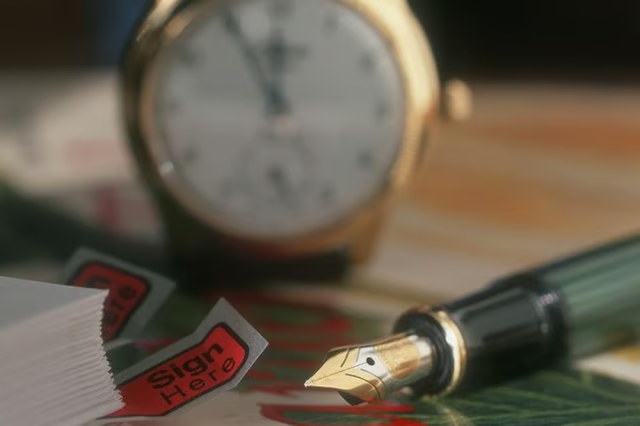


A pen is the traditional instrument of writing, so it is fitting that a writer be able to use words to create a vivid mental image of the tool of his craft. A description of a pen should give the reader the information to draw a mental image of the pen. The pen should seem real and three-dimensional to the reader. This means choosing among various literary devices to make the description as concrete and specific as possible.
Sensory Details and Images
Bring details involving the five senses -- sight, sound, smell, touch and taste -- to your description. Describe the color or colors of the pen, perhaps noting how light or shadow changes its appearance. Think about whether or not it makes scratching noise as it writes, or a thump as it falls to the ground. Include details about the pen's smell, and consider whether it smells like ink chemicals or cheap plastic. Maybe the pen feels hard to the touch, or maybe it has silicone for gripping that molds to the writer's hand. Consider whether a person using the pen has a nervous habit of chewing the end -- if so, describe what the pen tastes like.
Figurative Language
Use non-literal comparisons such as simile and metaphor to strengthen your description. A simile is a direct comparison that generally uses the words "like" or "as." One example might include something like, "The pen fell as quietly as a whisper." Or, "The overwhelming scent of permanent ink filled the room like mothballs." Also try using metaphor, in which the pen represents something else that has no real relationship with it. A sentence like, "The pen was his key to new worlds," might mean a protagonist feels stuck in a rut but finds freedom as he writes. Personification, which ascribes human traits to objects, might also help. For example, "The pen angrily bolted across the floor."
Word Choice
Syntax, or word choice, might add lyricism or flow to the description. Try repeating first letter consonant sounds in phrases and sentences. This technique, called alliteration, might feature a sentence like, "The plastic pen pointed toward the door like a petulant puppy." Assonance -- repeated vowel sounds -- may also improve the sound of your description. An example of assonance using the "u" or "oo" sound might include, "The pen's ink oozed onto the boots situated in the bedroom."
Vivid Verb Use
Avoid various forms of "to be" in favor of strong action verbs. Instead of a sentence like, "Then pen is heavy," add something such as, "The pen weighs so much it falls to the floor with a loud thwack." Instead of, "The pen is too bulky for arthritic fingers," use, "The pen's unwieldy shape pains arthritic fingers." Also avoid passive voice, in which the object of the action becomes the sentence's subject. Instead of, "The pen had been dropped on the floor," write, "He dropped the pen on the floor." Rather than, "The pen was depleted of ink by the writer," use, "The writer depleted the pen's ink."